
Major Risks: Govt increases earthquake readiness as experts warn
Al Mamun Harun Ur Rashid :
With a series of earthquakes rattling entire country over the past few days, the interim government has stressed that preparedness, enforcement of building regulations, and public cooperation are now matters of national urgency.
According to the Chief Adviser’s Office, Muhammad Yunus convened an emergency meeting on Monday at his Tejgaon office, calling in senior officials and leading experts to review the country’s readiness.
The meeting followed four earthquakes that struck on Friday and Saturday, including the deadliest tremor in decades.
The 5.7-magnitude quake that hit at 10:38am on Friday originated in Madhabdi, Narsingdi – just 13 kilometres from Dhaka, with its epicentre 10 kilometres underground.
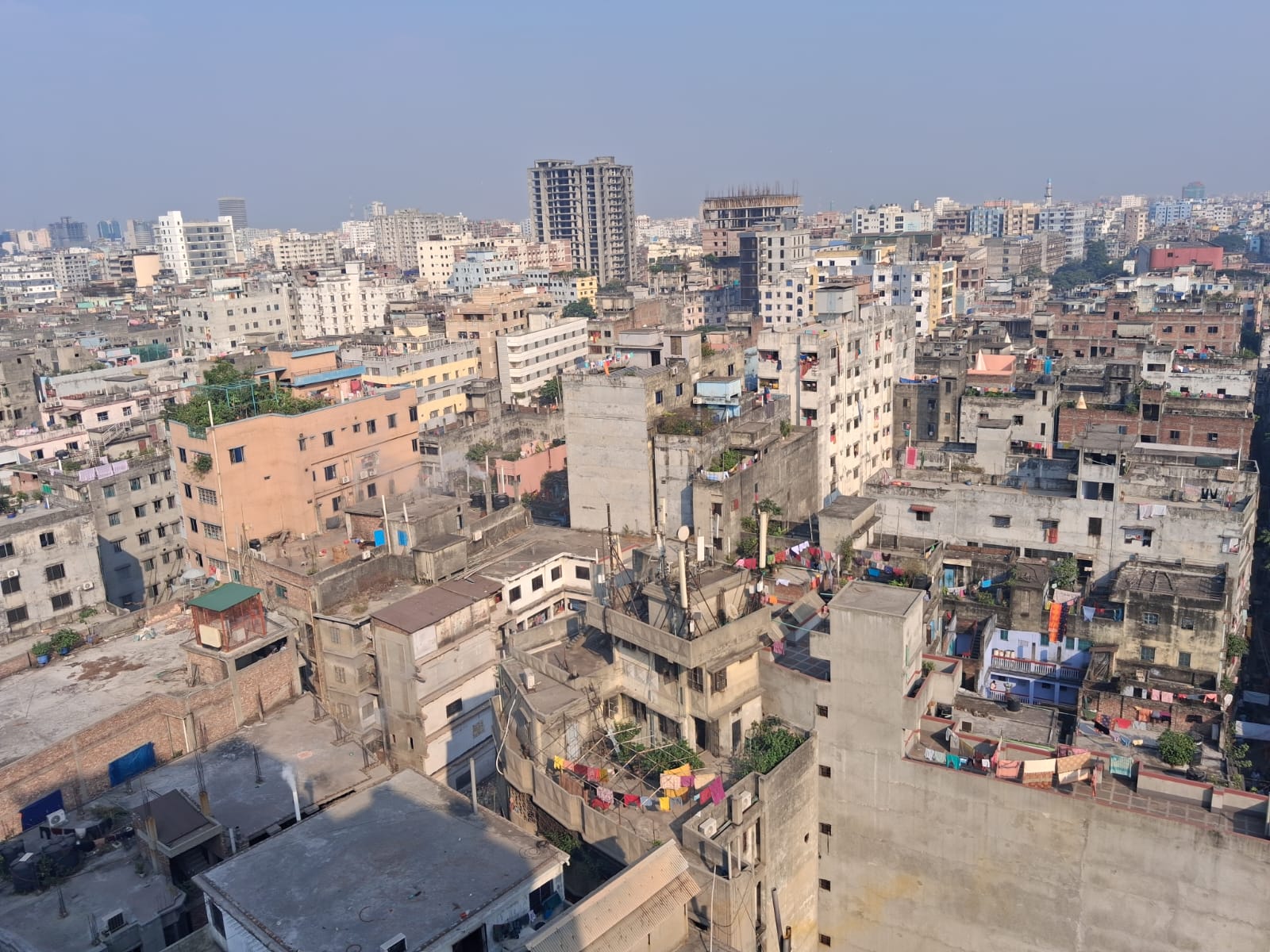
At least ten people lost their lives across three districts and more than 600 were injured. Numerous structures in the capital developed cracks, with some showing signs of tilting.
Yunus said, “We don’t want to sit idle, nor do we want to take any unscientific steps.
Please give us your recommendations in writing as soon as possible; the government is prepared to take all necessary measures.”
He added that work is underway to form the required expert committee and one or more task forces. As soon as the experts’ recommendations are received, actions will be taken accordingly.
At the meeting, Professor Dr Zillur Rahman said the sources and origins of earthquakes need to be reviewed-how many sources exist in Bangladesh and its surrounding areas, and what level of shaking they might generate must be determined.
Dhaka University Professor Dr Humayun Akhtar said young people need to be involved in raising public awareness. Plans of action must be prepared for four levels-indoor, outdoor, individual, and institutional-and delivered to everyone.
“If young people are engaged in natural hazard planning and technical initiatives, the public will be mentally prepared,” he said.
CUET Professor Jahangir Alam said the ministry can assess the installations under its jurisdiction. Hospitals, educational institutions, and electricity and gas connections must be treated as priority sectors.
If schools, colleges, and universities introduce earthquake-related programmes, it will build awareness instead of panic.
MIST Professor Md Zainul Abedin said people must be convinced that panic is not an option.
We have to work within our resources. People need to be made aware of the importance of staying calm.
Information on open spaces and safe gathering points should be shared, and drills should be conducted accordingly. Drills in homes and educational institutions are essential, he added.
The Chief Engineer (Civil) of the Public Works Department, Md Khalekuzzaman Chowdhury, said that a software-based process has already begun to collect images of buildings that developed cracks due to the earthquake.
Over two hundred buildings have been assessed so far. Most of the cracks are appearing on partition walls.
At a separate programme titled Preparedness and Actions for Reducing Earthquake Risks in Dhaka, Environment, Forest and Climate Change Adviser Syeda Rizwana Hasan said, “All relevant agencies including Rajuk must work together, and in the interest of public safety, the government must have the authority to intervene, assess risks, and take strict measures even when it involves privately owned properties.”
Rizwana stressed that public awareness and community engagement must be part of the response. She called for area-based surveys with the help of local residents and warned against delays.
“We cannot afford to wait. People must be reassured that the government is actively working to address earthquake risks,” she said.
Pointing to Old Dhaka as a high-risk zone, she highlighted hazardous chemical factories, dense settlements, and widespread violations of building codes.
At the same seminar, Housing and Public Works and Industries Adviser Adilur Rahman Khan said, “Without coordinated steps from government agencies alongside public preparedness, earthquake risk cannot be reduced. There can be no negligence when it comes to public safety.”
Rajuk Chairman Engineer Md Riazul Islam, who chaired the event, revealed that approximately 300 buildings in Dhaka have been identified as vulnerable after the recent tremors.
“Following Friday’s earthquake, we have been able to mark around 300 small and large vulnerable buildings,” he said.
He placed the primary responsibility on building owners for structural violations.
“Both Rajuk and building owners share responsibility for constructions that violate rules and approved designs. However, the main responsibility lies with the building owners,” he said.
“We approve building construction strictly following the rules. No work at Rajuk happens in exchange for money.”
He also clarified that Rajuk does not design building plans: “House owners have their buildings designed by engineers or architects and submit the plans to Rajuk with the commitment of following Rajuk regulations.
If they fail to follow those rules later, the penalties or punishments should go to the house owners. Rajuk cannot be held responsible for that.”
Meanwhile, it is reported that cracks have been found in the No. 1 Secretariat Building following Friday’s 5.7-magnitude earthquake.
The frequency of earth has forced educational institutions to take precautionary steps following the tremors. The Bangladesh University of Textiles (BUTEX) suspended its academic activities and ordered students to vacate residential halls.
A notice issued on Sunday stated that all academic activities will remain suspended from 24 November to 4 December, with exams resuming on 7 December. All halls will remain closed during this period.
Dhaka University and Jagannath University had earlier taken similar steps, temporarily closing their campuses to allow structural safety assessments.