
4 in 10 children have excessive lead in blood: BBS, UNICEF
Staff Reporter:
A recent study by UNICEF and the Bangladesh Bureau of Statistics (BBS) found that nearly four out of ten children in Bangladesh have concerning levels of lead in their blood.
According to the report, 38per cent of children aged 12 to 59 months and nearly 8per cent of pregnant women have blood lead levels above the safe limit.
Residents of Dhaka were the most affected, with 65 percent showing lead concentrations exceeding safe thresholds.
UNICEF says lead pollution poses a threat to children’s brain development and impacts all socio-economic classes.
More than half of the affected children are from higher-income families, while 30 percent are from lower-income families, the survey report says.
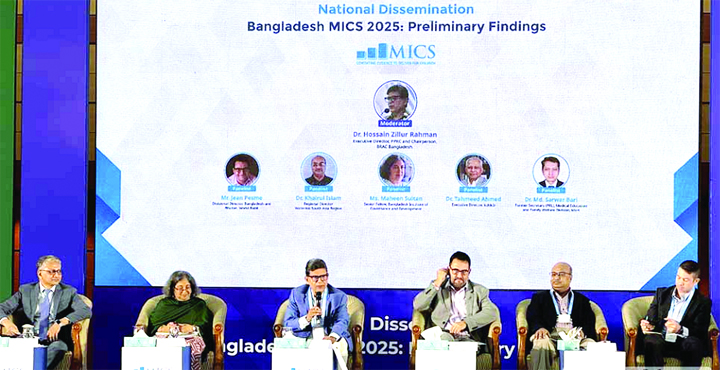
The Bangladesh Bureau of Statistics (BBS), in collaboration with UNICEF and other partners, released on Sunday the preliminary results of the Multiple Indicator Cluster Survey 2025 (MICS 2025), the most comprehensive survey of children and women in the country.
BBS Director General Mohammed Mizanur Rahman and UNICEF Representative in Bangladesh Rana Flowers attended the event.
The survey, based on a sample of about 63,000 households, highlights the progress and challenges in the health, nutrition, protection and development of children.
The survey has highlighted 172 criteria and 27 Sustainable Development Goal (SDG) indicators in line with national priorities and global standards.
The survey results provide an overview of the situation in all divisions, districts and three city corporation areas in the country, with the intent of helping policymakers identify areas of inequality and allowing them to take targeted measures.
The report shows that the rate of child labour in the country has also increased significantly.
The results show that the child labour rate among children aged 5 to 17 in the country is now 9.2 percent, up from 6.8 percent in the 2019 survey.
This means, the child labour rate has increased by 2.4 percentage points in six years, with most of the growth seen in the country’s north.
The child labour rate in the Rajshahi Division is 12.4 percent, and in Rangpur it is 11.8 percent.
As a result, UNICEF highlights that “another 1.2 million children are at risk” in the country.
The rate of Caesarean sections has also increased recently.