
Reading Newspapers in the Age of Clicks Time to Reawaken the Thinking of the Young Generation
S.M. Hasanuzzaman :
The world today stands at a strange crossroads. Technology dazzles our eyes, information floods our screens, yet amidst this abundance of data, depth of understanding is vanishing.
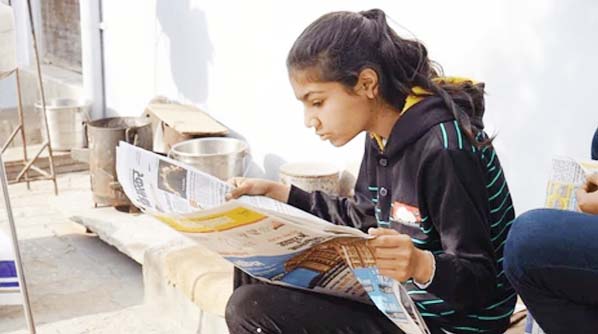
There was a time when reading the morning newspaper was a sacred ritual—its rustling pages carried not just news, but reflection, debate, and civic consciousness.
Today, that rustle has been replaced by the soundless scroll of a smartphone. The new generation wakes up not to headlines, but to notifications; not to analysis, but to algorithms.
They click, they swipe, they react—but rarely do they pause to think. They know more than any generation before them, yet understand less. In this relentless “age of clicks,” the ability to think critically is quietly eroding.
Young minds are flooded with updates, yet starved of context. They jump from one clip to another, one headline to the next—consuming fragments, not facts.
But newspapers, unlike fleeting digital content, cultivate patience. They train readers to follow a story in full, to see beyond surface excitement, to separate propaganda from perspective. A printed paper—or even a well-edited digital edition—is not just a source of information; it is a school of thought, a daily exercise in civic reasoning.
Technology, of course, is not the enemy. Progress should be celebrated. But every wave of innovation brings a hidden challenge—and in this era, the challenge is attention decay.
Studies show that the average young reader’s attention span has shrunk to mere seconds. They no longer read long features or editorials; they want “snackable” news—fast, flashy, and forgettable. Yet, the strength of a nation lies not in how quickly its citizens consume information, but in how deeply they can comprehend it. Newspapers foster this depth.
They present events alongside background, interpretation, and impact—training readers to ask questions, to verify facts, to form opinions based on evidence rather than emotion.
Without this discipline of reading, societies risk falling prey to half-truths and hysteria. When newspaper readership declines, rational thought is replaced by reactive emotion. Falsehood becomes fact, and facts become controversial.
A healthy democracy requires citizens who read before they react. But the click culture promotes the opposite—react first, read later, or worse, never. Many young people today dismiss newspapers as slow, old-fashioned, or irrelevant.
They crave immediacy, visuals, and viral sensations. They flock to TikTok explainers or YouTube “news shows” and think they’re informed. What they don’t realize is that every word in a credible newspaper passes through layers of verification, accountability, and editorial judgment.
A false rumor can go viral online in minutes, but a truthful story may take a journalist days’ to verify and write. That difference—between virility and validity—is what newspapers teach us to value.
Without this understanding, young people become vulnerable to misinformation, manipulation, and digital propaganda. Encouraging newspaper reading, therefore, is not nostalgia—it is resistance. It is an act of intellectual self-defense in a world drowning in noise.
Families, schools, and media organizations must work together to rebuild this culture. Parents should make a daily paper a part of their household again, reading and discussing one article each morning.
Schools could introduce a “News Hour,” where students analyze a headline, debate its social implications, and learn to distinguish between reporting and rhetoric. Universities might launch “News Literacy Clubs,” encouraging young minds to engage with editorials, op-eds, and investigative reports.
Newspaper reading also strengthens language and communication skills. Social media’s fractured; abbreviated language is eroding young people’s writing and thinking abilities. In contrast, newspaper language is disciplined—clear, precise, and powerful. Reading it daily refines thought, enriches vocabulary, and cultivates clarity.
A society that reads well thinks well. We live in an age of information warfare. Whoever controls attention, controls perception—and, eventually, power. Algorithms now decide what we see, believe, and care about. In such a landscape, reading newspapers becomes a revolutionary act of independence. It reconnects readers to verified truth, to public accountability, to human empathy. It trains the youth to be questioners, not followers; thinkers, not crullers.
A nation’s intellectual health depends on its reading habits. Books nourish the imagination; newspapers sharpen awareness of reality. If young people abandon both, they risk becoming technologically skilled but socially detached. They will know who went viral, but not who governs them—or why.
Bringing them back to newspapers is, therefore, not just about preserving journalism, but about reviving citizenship itself. Reading newspapers is a social investment. A regular reader is a thoughtful voter, a responsible citizen, a guardian of democracy.
Those who read think before they act but those who don’t react before they think. Reviving the culture of newspaper reading is thus a way of rebuilding the moral and intellectual foundation of society. Every click is an impulse, but every page turned is a decision. The newspaper demands attention, patience, and reflection—all of which are becoming endangered virtues. In a world obsessed with speed, reading slowly and critically is almost an act of rebellion.
We must teach our youth that fifteen minutes a day with a serious newspaper can reshape their worldview more profoundly than hours of scrolling through sensational feeds. Ultimately, a newspaper does what no algorithm can: it restores our humanity. It teaches empathy, nurtures civic sense, and connects individuals to the larger story of their nation. It reminds us that truth is not what trends—but what endures.
In an age where every click is designed to distract, the quiet act of reading may be the boldest way to resist. Clicking gives momentary excitement; reading gives lasting understanding. A click flickers and fades, but a printed word stays in the mind. The culture of clicking makes us rush; the culture of reading makes us pause, reflect, and grow.
Civilization advances not through speed, but through comprehension. Therefore, inspiring the new generation to read newspapers is not a sentimental plea—it is a strategic necessity. Because when the youth return to the newspaper page, they don’t just rediscover the news—they rediscover themselves, their society, and the truth that binds them both.
(The writer is a Retired Teacher and Columnist, Rangpur Sadar,
Rangpur, Email: [email protected])