
Cold waves threaten crops in northern BD
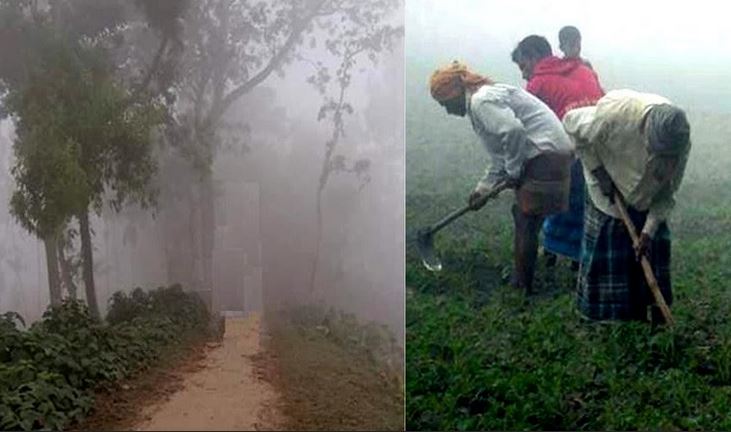
NN Special :
The livelihoods of thousands of farmers and day labourers in the northern districts are under growing threat, meteorologists and agricultural experts warn as Bangladesh braces for up to ten cold waves this winter.
The Bangladesh Meteorological Department (BMD) has forecast that temperatures may dip significantly from mid-December through February, with as many as ten moderate to severe cold spells sweeping across Rangpur, Rajshahi, and parts of Khulna divisions.
A survey covering the northern region found a net cultivated area of about 2,344,000 hectares, equivalent to around 30.3 % of the country’s net cultivated area at that time.
In another source, the northern part (greater Rangpur & Dinajpur regions) is said to have a total cultivable land of about 1,223,860 hectares.
“This winter is likely to be longer and more intense than last year,” said Abdul Alim, a meteorologist at the BMD.
“The northern and northwestern regions, especially Nilphamari, Panchagarh, and Dinajpur, could see temperatures fall below 8°C during peak cold waves.”
For the region’s farming communities, the warning comes at a critical time. Boro paddy seedlings, winter vegetables, and early potato crops — all sensitive to sudden temperature drops are already in the fields.
In Kurigram’s Chilmari upazila, vegetable grower Abdur Rahman has covered his brinjal and tomato plots with polythene sheets to protect them from early morning frost.
“Last year I lost nearly half my yield due to the cold. This time I can’t afford another setback,” he said.
Agricultural extension officers say prolonged cold can damage seedlings, slow plant growth, and make crops vulnerable to pest attacks.
Livestock are also at risk, particularly calves and poultry, which often die from respiratory infections during sharp temperature drops.
Dr. S.M. Zahirul Islam, a crop scientist told The New Nation that farmers need timely advice and access to protective materials.
“Farmers should use mulching, avoid over-irrigation, and cover seedbeds at night.
Local administrations should stock sufficient seed and fertilizer for quick replanting if needed,” he added.
The recurring cold waves have wider social implications too. Day labourers and rural poor, especially women working in open fields, struggle to find work during cold spells.
According to NGOs working in Rangpur, daily income in some villages drops by half during the coldest weeks.
“When temperatures fall below 10 degrees, people simply stop going to work,” said Rashida Begum, a community organiser in Lalmonirhat. “Families skip meals to buy warm clothes, and health problems like pneumonia and asthma rise sharply.”
Local administrations in the northern districts say preparations are underway to distribute warm clothes and blankets among vulnerable communities.
Disaster Management and Relief Ministry officials said 500,000 blankets have already been allocated for the most affected upazilas.
However, experts argue that short-term relief is not enough. With cold waves becoming more frequent due to changing weather patterns, they call for long-term adaptation measures — such as introducing cold-resistant crop varieties and expanding rural health services.
“We cannot treat cold waves as isolated events anymore,” said climate analyst Dr. Mizanur Rahman.
“They are part of Bangladesh’s growing climate variability. The poor will continue to suffer unless local adaptation is mainstreamed into agricultural and social protection policies.”
As the country prepares for another harsh winter, the warnings are clear: for many in northern Bangladesh, the chill in the air may also bring the chill of uncertainty.