
NOC now mandatory for automatic rice mills across BD
Md Istiak :
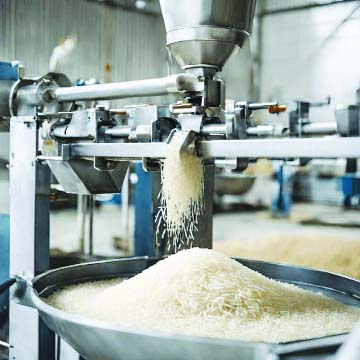
The government has introduced a new rule requiring all automatic rice mills to obtain a no-objection certificate (NOC) from the Ministry of Food before being established. The move aims to ensure rice mills are more evenly distributed across the country and aligned with local paddy production, addressing regional imbalances and promoting sustainable development in the sector.
Currently, most of Bangladesh’s 8,000-8,500 automatic rice mills are concentrated in the northwestern districts of Dinajpur, Bogura, Chapainawabganj, Naogaon, and Kushtia, which together account for around 40 percent of all mills. In contrast, rice-growing districts such as Sunamganj, Nilphamari, Bhola, and Satkhira have few or no mills, forcing farmers to transport paddy long distances, increasing costs and wastage.
Md Masudul Hasan, Secretary at the Ministry of Food, said that the excessive concentration of mills in some areas not only raises transportation costs but also leads to environmental pollution, higher waste generation, and strain on local resources. “Some districts have multiple mills, while neighboring areas with sufficient demand have none,” he said.
Under the new rule, applicants must obtain clearance from a central assessment committee comprising representatives from the ministries of food, agriculture, land, power, energy, environment, and the Food Safety Authority. The committee will assess local paddy production, existing mill capacity, transport links, electricity and water availability, employment potential, environmental impact, and safety measures. It will also verify whether the proposed mill is at a safe distance from residential areas and if waste management systems meet environmental standards.
Only after receiving the NOC can applicants apply for further licenses from the Department of Environment, Bangladesh Standards and Testing Institution (BSTI), Power Division, and Fire Service. The government says the measure aims to promote food security, protect farmers’ interests, stabilize the rice market, and ensure sustainable industrial management.
However, some mill owners have criticised the decision for being made without stakeholder consultation. KM Layek Ali, Senior Vice-President of the Bangladesh Auto, Major and Husking Mill Owners Association, told The New Nation, “We were not informed, invited, or given a chance to share our views. Dialogue is necessary to maintain trust and fairness.”
The government hopes the new rule will lead to balanced growth in the rice milling sector, improve market efficiency, and protect the environment while ensuring equitable opportunities for farmers across all rice-producing regions of Bangladesh.