
13pc of garment workers yet to receive full minimum wage
Business Report :
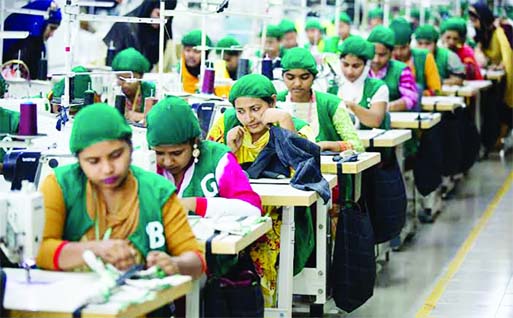
A recent study has revealed that around 13 percent of garment workers in Bangladesh have yet to receive the full adjustment of the government-mandated minimum wage, highlighting gaps in wage implementation across the country’s key export industry.
In 2023, the government set the minimum monthly wage for entry-level garment workers at Tk 12,500.
According to Professor Jakir Hossain of the Institute of Bangladesh Studies at the University of Rajshahi, 87 percent of surveyed workers received the full wage increase.
However, 8 percent received only partial adjustments, and 5 percent did not see any increase in line with the revised wage structure.
The study, titled “Minimum Wage Implementation in Bangladesh’s Readymade Garment Sector: Status of Compliance and Consequences for Workers”, was presented on Sunday at a city hotel in Dhaka.
The survey, conducted between May and June 2025, covered 240 workers from 60 factories across Dhaka, Gazipur, Narayanganj, and Chattogram, providing a representative snapshot of wage compliance in the sector.
Professor Hossain noted that compliance rates were significantly higher in factories with active trade unions or those recognized for strong adherence to labor regulations.
“Workers in unionized factories were far more likely to receive the full wage increase on time,” he said, emphasizing the role of worker representation in ensuring fair pay.
The event was organized by the Awaj Foundation, with support from Mondiaal FNV, and moderated by Nazma Akter, Executive Director of the foundation.
Industry leaders, including BGMEA President Mahmud Hasan Khan and BKMEA President Mohammad Hatem, attended the programme, underlining the importance of dialogue between labor and management.
The findings shed light on ongoing challenges in the implementation of labor policies in Bangladesh’s garment sector, which employs millions of workers and is a cornerstone of the country’s export economy.
Labor rights advocates stress that ensuring full and timely payment of the minimum wage is essential not only for the welfare of workers but also for the reputation of Bangladesh’s readymade garment industry in the global market.
Non-compliance could impact relationships with international buyers who increasingly demand ethical labor practices.
Professor Hossain suggested that stricter monitoring, stronger enforcement mechanisms, and increased cooperation with trade unions are necessary to close the remaining gaps in wage implementation.
He also recommended raising awareness among workers about their rights to ensure they can claim their due wages confidently.