
Business Report:
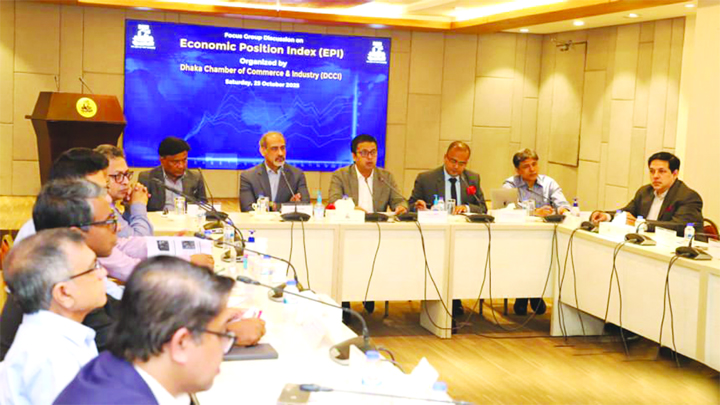
Residents of Dhaka earn an average per capita income of $5,163, nearly twice the national average of $2,820, according to the latest Economic Position Index (EPI) survey released by the Dhaka Chamber of Commerce and Industry (DCCI). The quarterly survey, aimed at providing a real-time assessment of economic activity, underscores the concentration of wealth, employment, and corporate power in the capital. The findings were presented at a DCCI event held on Saturday.
According to the survey, Dhaka district alone contributes 46 percent of the country’s total GDP and provides 40 percent of national employment, equating to approximately 68 million people. The capital also generates 40 percent of Bangladesh’s total exports and houses 32 percent of the country’s urban population, representing 11.2 percent of the national population, making it one of the most densely populated cities in Asia.
The report also highlights the concentration of corporate power, noting that 55.8 percent of the manufacturing sector is controlled by just 365 companies, while 58.6 percent of the garment industry is dominated by 214 organizations. Speakers at the event emphasised that such concentration poses challenges for economic diversification and equitable growth.
DCCI President Taskeen Ahmed pointed out that traditional economic indicators such as GDP growth, the Business Confidence Index, or Ease of Doing Business rankings often fail to capture real-time shifts in the economy. “The EPI is designed to provide timely insights into production, sales, order flows, exports, employment, and investment trends across both manufacturing and services sectors, including ready-made garments, textiles, wholesale and retail trade, real estate, transport, logistics, and banking,” he said.
Experts at the event also highlighted the dominant role of the informal sector, which accounts for nearly 80 percent of the national economy. They urged that future editions of the EPI include the agricultural sector to provide a more comprehensive picture of the country’s economic landscape.
Other speakers, including Dr AKM Asaduzzaman Patwary, Acting Secretary General of DCCI; Miah Rahmat Ali, Senior Private Sector Specialist at IFC; Dr Mostafa Abid Khan, former member of the Bangladesh Trade and Tariff Commission; and Rizwan Rahman, former DCCI president, stressed that data-driven policymaking is critical to managing the challenges posed by rapid urbanisation, corporate concentration, and sectoral shifts.