
Rising essential prices bite harder as hope fades
Abu Jakir :
Even as the interim administration headed by Nobel Laureate Muhammad Yunus declares that economic discipline is being restored, ordinary people continue to live with deep anxiety and frustration. The cost of living—particularly the price of essential commodities such as poultry and fish—is placing new burdens on households, many of whom believe that the next elected government could better relieve their ordeal.
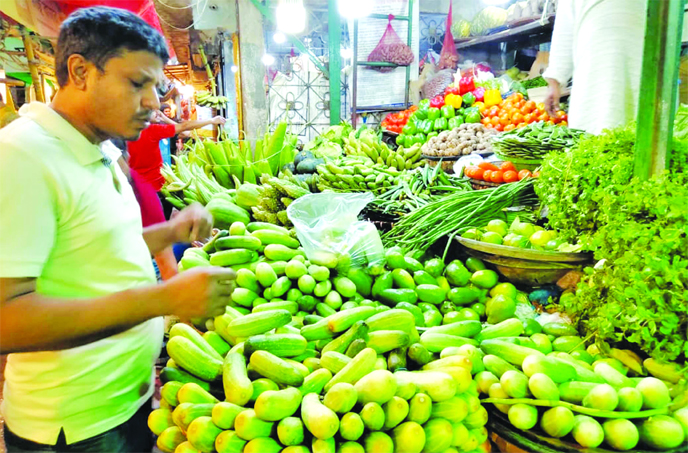
Marketplace Realities: Rising Costs, Unrelenting Pressure
On Friday morning (24 October) in Dhaka’s Azampur wholesale market and the retail bazaars of Malibagh-Badda, shoppers encountered unchanged or higher prices for many staples. While the cost of broiler chicken has dipped slightly, prices remain far beyond the reach of many. Broiler chicken is being sold at about Tk 170-180 per kg, layer chicken at Tk 310, “Sonali” chicken at Tk 280, imported Pakistani chicken at Tk 320, and indigenous (deshi) chicken at a staggering Tk 600 per kg. Indigenous “pati?hans” (local duck) is being sold at around Tk 550–600/kg. Sellers say that although broiler wholesale prices have come down slightly (from over Tk 180 to around Tk 155–160 per kg), retail reflects only partial relief.
In the fish markets, meanwhile, no meaningful price reductions were visible: Rui fish at Tk 350–450/kg, katla at Tk 400–450, shing at Tk 500–550, farmed magur at Tk 500, koi at Tk 200–250, pangash at Tk 180–200, and tilapia at Tk 150–250. Sellers attributed the lack of reduction to unchanged farm- and transport-costs despite steady supply.
One shopper, Azam Khan, lamented: “We are now relying only on broiler chicken because the price of Sonali or Pakistani or deshi chickens has become double. Earlier we would buy them because they were cheaper; now, even a small Sonali chicken costs me Tk 350. It’s the end of the month and just getting through the days is the challenge.”
Another shopper, Delwar, pointed out that broiler and pangash (a cheaper fish option) prices have almost converged: “Earlier chicken was cheaper; now the price difference is negligible. Everything is at the same level.”
Meanwhile, retail beef is being sold at Tk 750-800 per kg and goat meat at Tk 1,000-1,100 per kg. Many families say that such prices mean meat consumption is increasingly a luxury.
Government Response and Public Expectation
The interim government, which assumed power following the student?led uprising and the departure of the former administration, says it has made the fight against inflation a priority. Chief Adviser Yunus recently stated that “discipline has been restored in the economy” and pledged to bring inflation down.
He has on multiple occasions instructed field?level officials to keep the prices of essentials at “tolerable” levels, especially ahead of Ramadan and other festival periods.
Yet, critical voices say the everyday lived reality of citizens does not reflect this promise. A recent newspaper report quotes a political rally demanding that Yunus’s government act immediately to reduce the price hikes of essential commodities, saying that “common people were suffering much” under the conditions.
In a commentary titled “A nation in waiting: Urgent priorities for Bangladesh’s interim …”, analysts write: “If that is the case, why are kitchen-market prices … remaining so high?”
In addition to economic grievances, there is growing impatience about the election timetable. The interim administration has said it will hold the next general election by April 2026.
Many citizens believe that only a fully elected government will be in a position to relieve their immediate burdens. A statement in November 2024 from a rally by the Revolutionary Communist League stressed this, urging the interim government to hold the next general elections “as early as possible”.
Underlying Factors and Outlook
Economists and observers point to several interlocking factors driving the price burdens: global inflation pressures, logistical and transport cost increases, middle?men syndicates that dominate retail supply chains, and sluggish recovery of farm?level production or efficient imports. While the interim government has taken actions such as removing import duties on foodstuffs and relaxing import financing for producers, inflation remains elevated.
“The ordinary citizen is still struggling to make ends meet. The government has changed, but nothing has changed in the market,” said Rafiqul Islam, an unemployed journalist.
Many families are thus living in a limbo: supporting the reform narrative of the interim government, yet waiting impatiently for the relief that they believe only a fully elected government can deliver.
As Bangladeshis shop for chicken, fish and other essentials, the daily reality is one of high prices, constrained budgets and a sense of waiting. The interim administration under Muhammad Yunus may lay the structural groundwork for reform, but for many households the question is immediate: when will relief come?
Until then, the anxiety persists and the bargain of hope—of lower prices under an elected government—remains unfulfilled.