
Govt plans rail link to all economic zones
Business Desk :
The government has launched a major initiative to establish direct railway connectivity with all economic zones (EZs) across Bangladesh, aiming to streamline goods transportation and accelerate industrial growth.
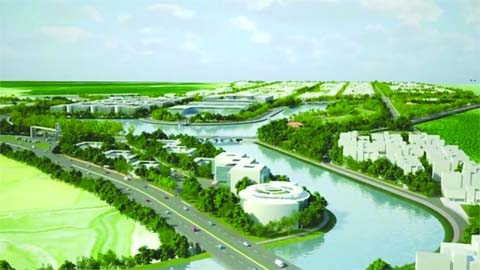
The plan includes the National Special Economic Zone in Chittagong’s Mirsarai, which is set to become a key hub in the country’s evolving transport and logistics network.
“We are preparing an integrated plan for all economic zones, with a particular focus on Mirsarai,” said Sheikh Moinuddin, special assistant to the chief adviser for the Ministry of Road Transport and Bridges and the Ministry of Railways, reports UNB.
“Our goal is to ensure that goods can be loaded directly onto trains from each zone, eliminating the need for truck transfers and reducing both time and cost.”
Officials confirmed that a comprehensive master plan is underway to link all EZs with Bangladesh’s railway, road, and port infrastructure.
Once implemented, the initiative is expected to enhance export capacity, improve supply chain efficiency, and strengthen the country’s industrialization drive.
Bangladesh has been developing economic zones to attract foreign direct investment (FDI), boost manufacturing, and generate large-scale employment.
While the previous administration set a target of establishing 100 EZs by 2025, the current government is prioritizing the full operationalization of five key zones to ensure effective delivery.
The Bangladesh Economic Zones Authority (Beza) has outlined a two-year roadmap to make these five zones fully functional.
Beza Executive Chairman Chowdhury Ashik Mahmud Bin announced earlier this year that the zones are projected to attract $5.5 billion in investment and create over 200,000 jobs.
The five priority zones include the National Special Economic Zone in Mirsarai, Sylhet Economic Zone, Jamalpur Economic Zone, Maheshkhali Economic Zone, and the Japanese Economic Zone.
Among them, Mirsarai stands out as the largest public sector EZ, spanning 30,000 acres across Mirsarai, Sonagazi, and Sitakunda upazilas.
Experts note that direct rail connectivity to Mirsarai will be critical for the efficient movement of raw materials and finished goods to ports and domestic markets.
The enhanced infrastructure is expected to make the zone more attractive to both local and international investors, positioning it as a cornerstone of Bangladesh’s industrial future.