
DUCSU electioneering at peak with festive, fierce competition
Abu Jakir :
With only a day left before the curtain falls on campaigning for the long-anticipated Dhaka University Central Students’ Union (DUCSU) election, the campus has transformed into a carnival of leaflets, and inventive strategies as candidates make last-minute appeals for votes.
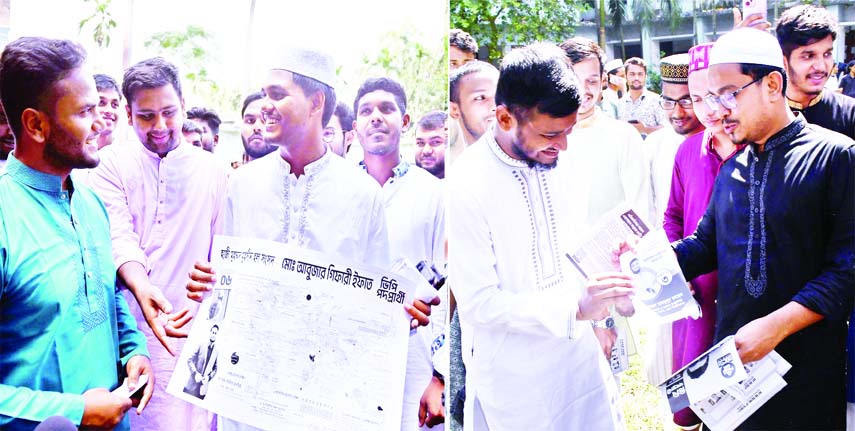
From TSC tea stalls to the main library lawns, smiling faces with leaflets in hand have become an everyday sight. Candidates and their volunteers are seen moving door-to-door, slipping campaign cards into hands while introducing themselves and their ballot numbers with the same request: “Vote for me.”
Independent candidate for Assistant General Secretary (AGS) post, Tahmid Al Mudassir Chowdhury, told The New Nation: “We are spending busy hours for campaigning as only two days are left. We are getting spontaneous support from student voters. I believe the polls will be held in a free, fair and credible manner-no conspiracy will succeed in stopping them.”
This year, however, traditional posters and leaflets are being overshadowed by a wave of creativity. Campaigns have taken the form of mock currency notes, UNO cards, bookmarks, pop-culture-inspired posters, and even props shaped like cricket bats, buses, and Wi-Fi symbols. Each innovation is designed not only to grab attention but to remain memorable among thousands of student voters.
One of the biggest talking points has been the “currency-style” leaflets-designed like banknotes but carrying ballot numbers, slogans, and candidates’ smiling portraits instead of governors’ seals.
Another highlight has been bookmarks featuring famous art such as Van Gogh’s Starry Night, the iconic Aparajeyo Bangla, or even nostalgic campus landmarks.
Some candidates have leaned on pop culture: one central member aspirant drew excitement with Spider-Man-themed videos, followed by Breaking Bad-inspired leaflets that went viral online.
Competition has been particularly fierce among those vying for posts like transport secretary, where candidates handed out campaign cards shaped like miniature buses, reflecting their pledges to fix student transport woes.
Sadik Kayem, Vice Presidential (VP) candidate for the Islami Chhatra Shibir panel, expressed his optimism despite the challenges: “The DUCSU election is not just a contest of individuals, but of ideologies. We are reaching out to students with our program of reform and morality. The response has been encouraging, and I am confident that students are looking for principled leadership this time.”
Chhatra Dal’s candidate for General Secretary (GS), Abid Hasan, also shared his thoughts with the media. He said: “This campaign has been a test of resilience for us. We are getting a lot of support, and students want change after decades of inaction. I believe this election will revive the true spirit of DUCSU and restore democratic practices on campus.”
Meanwhile, printing presses near campus, such as in Gausul Azam Market, have been running at full capacity to meet demand. Printers described the rush as unprecedented compared to the 2019 election. “This year everyone is openly participating, ordering thousands of posters and leaflets. There is a real festive mood,” said Ranjit Sarker, owner of Jhorna Enterprise.
The campaign has also spilled into the digital realm. Videos, memes, and customized “photo cards” have flooded Facebook, amplifying messages beyond the physical campus. Cultural events, music, and poetry readings have added further vibrancy, though some gatherings have faced scrutiny from university authorities.
With campaigning officially ending on September 7, excitement is peaking across the university. The election itself, scheduled for September 9, comes after dramatic delays and controversies, making this contest one of the most closely watched in recent years.
Authorities have announced restrictions on campus entry between September 8 evening and the morning of September 10 to ensure security and a smooth voting process.
For now, Dhaka University’s campus remains alive with color, sound, and energy-where every leaflet, slogan, and handshake represents not just a plea for votes, but a snapshot of a renewed spirit of student politics after years of stagnation.