
Rohingya Crisis: Eight years in limbo – still no ray of return
Al Mamun Harun Ur Rashid :
Eight years ago today, more than 750,000 Rohingya – women, children and the elderly among them – fled a military crackdown in Myanmar’s Rakhine State and sought shelter in Bangladesh. The United Nations described the exodus as a “textbook example of ethnic cleansing,” creating what is now the world’s largest refugee settlement.
Since then, despite repeated pledges, international conferences and regional diplomacy, no breakthrough has been reached on safe, voluntary and dignified repatriation. Myanmar is meanwhile preparing for a general election later this year – one in which the Rohingya are unlikely to participate.
“This is one of the most protracted refugee situations in recent history, and the world cannot look away,” UN High Commissioner for Refugees Filippo Grandi said earlier this month. “The Rohingya deserve a future that includes dignity, rights, and a safe return home.”
Bangladesh now hosts almost 1.4 million Rohingya in the camps of Cox’s Bazar and on Bhasan Char, shouldering considerable social and economic pressures.
Since taking office last year, Chief Adviser Professor Muhammad Yunus has sought to restore global attention, launching dialogue initiatives in the camps and preparing a high-level UN conference for 30 September in New York, followed by a Doha meeting later in the year. Yet doubts remain over whether such forums will deliver results.
Former Dhaka University professor Imtiaz Ahmed told The New Nation, “I do not believe the Rohingya problem can be solved through the United Nations or international conferences. In the cases of Gaza and Ukraine, I have not seen the UN play any significant role. Depending solely on the UN will not resolve this problem.”
He added, “The Myanmar government must be made to realise that resolving the Rohingya issue will be beneficial for them. That is why the solution has to involve both the Myanmar government and the Arakan Army.”
Professor Ahmed also pointed to the importance of Myanmar’s neighbours, “China and India are Myanmar’s closest neighbours; their actions will be extremely important. And as for the upcoming UN conference, we still do not know whether Myanmar’s representatives will even be present.”
On Bangladesh’s approach, he was critical, “Since Myanmar is a military-ruled country, we could have engaged them through military diplomacy, but over the last eight years, we have not done so. This has been a weakness on our part.”
National Security Adviser Md. Khalilur Rahman underlined the need for broader regional engagement, telling The New Nation, “To resolve this problem, everyone in the region must be involved. Although it originated in Rakhine, it has long persisted across the entire region.
The Myanmar government needs to determine its future political framework. Not only China and India, but ASEAN is also a factor. Malaysia, for example, is quite interested in resolving this issue, as around 200,000 Rohingya live there. So, they too are under pressure. The solution must come through sitting with all parties together and finding a way forward.”
He added, “Myanmar has clearly told us that taking back the Rohingyas is their principled position. We are maintaining communication with both the Arakan Army and the Myanmar government to resolve the crisis.”
Conditions in the camps continue to deteriorate. Food ration cuts, funding shortfalls, restrictions on education and the absence of employment opportunities have deepened frustration. Security has also worsened, with armed groups accused of extortion and targeted killings. Earlier this year, Bangladeshi forces arrested ARSA commander Ataullah Abu Ammar Jununi, highlighting ongoing volatility.
Meanwhile, Myanmar’s military government has announced elections this year that observers say are likely to entrench military dominance rather than open democratic participation. The Rohingya, stripped of citizenship under the 1982 law, remain excluded.
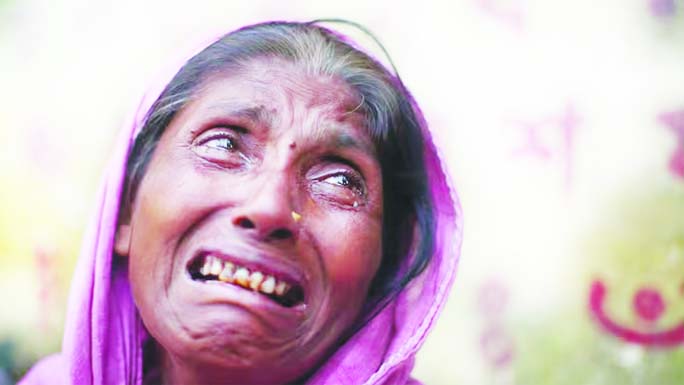
“We have been waiting eight years. We want to go home, but only with rights and security,” said Noor Begum, a mother of three in Kutupalong camp. “We cannot live like this forever.”
As the crisis enters its ninth year, Bangladesh insists that responsibility cannot rest on Dhaka alone. For the Rohingya, the hope of safe return remains alive – but the reality of when that might happen is far from certain.