
The human cost of tea
NN Special :
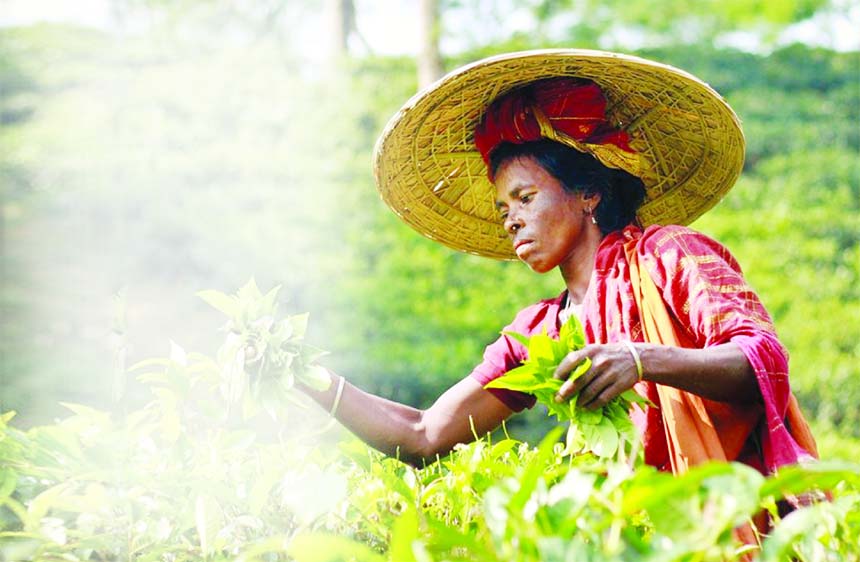
Hundreds of tea workers, the majority of them women, continue to endure hardship in their struggle for basic human rights and fair wages. Despite the existence of protective labour laws, they remain deprived of adequate food, healthcare, education, and fair compensation. Many also face verbal, physical, and sexual abuse, while their long-standing demands for a dignified life are largely ignored.
With daily wages fixed at just Tk 170, it is nearly impossible for a tea worker to support a family. This exposes the deep inequalities and persistent exploitation within an industry that is central to Bangladesh’s identity and economy. Human rights experts note that most workers remain unaware of the government health services available to them.
A study by the Bangladesh Institute of Labour Studies (BILS) reveals that 97 per cent of female tea workers lack formal appointment letters, while 87 per cent do not have identity cards, with one in ten unaware of what an identity card even is. The Asia Law Journal further reports that the majority of female tea workers suffer from widespread abuse – in clear violation of their rights as citizens.
Although their demands are modest, the response has been inadequate. Following protests in 2022, the minimum daily wage was raised from Tk 120 to Tk 170. Yet the amount remains far below what is needed to meet basic living costs. By comparison, tea workers in India’s Assam earn the equivalent of Tk 330 per day, while their counterparts in Sri Lanka receive Tk 940. Bangladesh’s per capita income stands at US$2,784, but a tea worker earns just US$1.43 a day.
The current wage system is based on biennial agreements between the Bangladesh Tea Association (BTA) and the Tea Workers’ Union. Although estate owners had pledged Tk 300 a day in 2020, the commitment was never honoured. In August 2022, fresh demands for Tk 300 a day led only to the current Tk 170 rate.
The economic hardship is stark. A kilogram of rice costs around Tk 75, while the ingredients required to provide a family with a balanced diet may reach Tk 500 a day. At present rates, workers cannot secure even basic nutrition.
Education remains another major concern. Among 241 tea estates, there are only two high schools, a handful of government primary schools, and no colleges. Many children are forced into plantation work rather than classrooms. Housing is also inadequate, with families residing for generations in dwellings as small as eight by twelve feet.
These conditions run counter to both international and national legal commitments. Article 26 of the Universal Declaration of Human Rights guarantees education, while Article 17 of Bangladesh’s Constitution provides for free and compulsory schooling. Similarly, Section 34.1 of the Bangladesh Labour Act (2006) prohibits child labour, and Section 5 requires that all workers receive appointment letters – conditions rarely met in tea estates.
Tea workers are also denied provident fund benefits, despite Section 320 of the same Act granting such entitlements. Article 14 of the Constitution commits the state to ensuring freedom from exploitation in the workplace, yet this promise has not reached the plantations.
Though various legal instruments exist – including the Bangladesh Tea Workers’ Welfare Fund Ordinance (1986), the Tea Plantation Ordinance (1979, amended 1986), and the Tea Plantation Labour Rules (1977) – enforcement has remained weak.
Supreme Court lawyer Sayeed Ahmed observes: “These laws do exist, but they are not adequately enforced. Many middlemen deny tea workers their fundamental rights and decent salaries for their own gain.”
The Bangladesh Labour Act of 2006, consolidating 27 previous statutes, was designed to improve protections across the workforce. Yet it contains no explicit provisions for tea workers, leaving them vulnerable. Illiteracy and lack of awareness of their rights compound the problem, perpetuating cycles of poverty and exploitation.
Despite tea workers’ critical contribution to the national economy, they remain socially marginalised and excluded from many government welfare schemes. They are not classified as minorities, nor formally recognised as indigenous communities, which further restricts their access to quota benefits.
In light of Bangladesh’s commitments to the Sustainable Development Goals – including the eradication of forced labour and exploitation – the plight of tea workers demands urgent attention. Without meaningful reform and proper enforcement of existing laws, generations of workers will continue to live without dignity, trapped in poverty at the margins of society.