
High tariff on India: Dhaka eyes bigger slice of US market
Gazi Anowar :
The United States has imposed a 50% tariff on Indian goods, while Bangladeshi exports face only a 20% duty – a move that could give Bangladesh a significant competitive edge in the American market.
Local exporters and officials believe this tariff gap will help boost Bangladesh’s exports to the US, particularly in sectors where both countries supply similar products.
Exporters say the steep tariff will make many Indian products costlier in the US, opening opportunities for Bangladeshi alternatives. Alongside ready-made garments – Bangladesh’s top export – leather goods, processed agricultural food, handicrafts, jute products, plastics, home textiles, and furniture are expected to gain more orders.
Several Bangladeshi exporters told The New Nation that US importers, moving away from Indian suppliers, have already increased contact with Bangladeshi companies. Since tariffs directly impact final prices, the lower duty on Bangladeshi goods will allow local exporters to offer more competitive prices, making them more attractive to US buyers.
Some companies have set ambitious goals. Danish Foods, a subsidiary of Partex Group, aims to double its US exports within a year. “Buyers have increased communication with us.
Since India’s similar products now face higher duties, interest in our goods is rising,” said a Senior Manager at Danish Foods. The company currently sends 15-17% of its exports to the US and hopes to raise this to 30%.
Plastics, leather goods, furniture set to benefit
The plastic sector is another key gainer. ACI Premio Plastics has set a monthly export target of $1 million to the US. According to Bangladesh Plastic Goods Manufacturers and Exporters Association (BPGMEA) President Shamim Ahmed, India was a major competitor in the US plastic market. “Now, even US suppliers who invested in India may shift to Bangladesh,” he told The New Nation.
In FY 2024-25, Bangladesh exported $14 million worth of plastic goods to the US – a 42% increase from the previous year.
The leather and footwear sector is also optimistic. Last fiscal year, Bangladesh exported $670 million worth of leather shoes and $90 million of other leather goods to the US.
K M Mushfiqur Rahman, MD of Essensor Footwear & Leather Products, said the company sends 90% of its exports to the US and expects new American buyers who previously sourced from India. He also noted that US-China trade tensions are prompting more buyers to shift orders from China to Bangladesh.
Furniture exporters are eyeing gains as well. HATIL Chairman Selim H Rahman said the company’s US exports were previously limited due to high import duties on raw materials. “If the government reduces duties and offers bond facilities for raw material imports, we can fully capitalise on this opportunity,” he said.
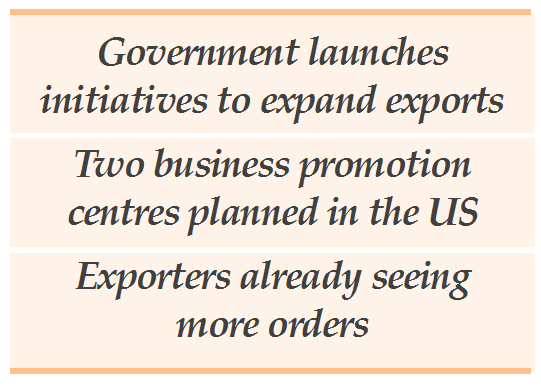
Government gearing up to help exporters The government is moving to support exporters in seizing this window. Export Promotion Bureau (EPB) Vice Chairman Anwar Hossain said the Bureau is proposing to set up two business promotion centres in New York and California to showcase and promote Bangladeshi products in the US.
“We are also discussing with the National Board of Revenue (NBR) to provide bond facilities for raw material imports. We are in the final stage and hope to announce good news next week,” Hossain said.
The Ministry of Commerce is also working on changes to the import policy to support all export-oriented sectors equally. EPB plans to increase Bangladesh’s participation in US trade fairs and is setting up an SME cell to promote diversified product development.
Industry insiders say that with timely government support and aggressive market promotion, Bangladesh could achieve significant export growth to the US in the coming years – leveraging the tariff gap with India while expanding its product portfolio.