Shibir unveils 30-point education reform plan, urges government action

Staff Reporter:
Bangladesh Islami Chhatra Shibir has unveiled a 30-point education reform proposal, calling for the transformation of the country’s education system into one that is inclusive, modern, value-based and reflective of national aspirations in the post–July uprising era.
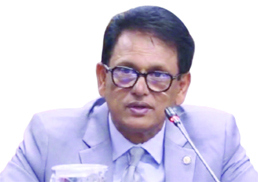
The proposal was announced on Thursday afternoon at a press conference at the Abdus Salam Hall of the National Press Club in Dhaka. Shibir’s central president, Zahidul Islam, presented the plan, which covers curriculum, policy, administration, higher education, madrasa reform, skills development, evaluation, teacher training, and related issues.
In his written statement, Zahidul Islam said Bangladesh had entered its second year since the ouster of “fascist” rule through the July 2024 mass uprising. While political and cultural reforms were being discussed, he said, there had been no clear government programme for modernising the education system, a sector he called “central to building a prosperous nation.”
The Shibir leader traced the country’s political history from 1947 through 1971 to the present day, arguing that independence had failed to deliver fundamental improvements in people’s lives, citing the decay of democratic institutions, one-party rule, corruption, and social inequality.
The July uprising, he said, had renewed hope for a new national structure.
He criticised past education policies, including the 1972 Kudrat-e-Khuda Commission, for ignoring the majority’s values and traditions. He alleged that the 2010 education policy — fully implemented in 2022 under the former government — was designed to uproot religious education, replacing Islamic content with what he described as “un-Islamic” elements. He also condemned the interim government’s decision to revert to the 2012 curriculum, calling it a disappointment after the revolution’s promises.
Shibir’s proposals aim to create an education system that is moral, equitable, technologically advanced and creativity-driven, serving urban and rural students alike regardless of socio-economic status, gender, religion or ethnicity. Zahidul Islam stressed the need for significant investment, pointing out that Bangladesh allocates less than 2% of its GDP to education — far below UNESCO’s recommended 6% and lagging behind many Asian peers.
The 30-point plan includes: forming an inclusive education commission; incorporating the July uprising into the syllabus; designing a modern curriculum rooted in Islamic values; prioritising STEM education; ensuring military and physical training; passing a law for free and compulsory education up to higher secondary; creating an independent recruitment commission; guaranteeing safe and supportive environments for female students; modernising teacher training; reforming the evaluation system; integrating special-needs and disadvantaged children into mainstream schooling; improving madrasa and vocational education; and ensuring parental participation in school governance.
Other proposals call for expanding student housing, mental health services, research-oriented higher education, and employment opportunities to reduce graduate unemployment. Special measures are recommended for tribal and minority communities to ensure equal rights in education.
Zahidul Islam framed the reforms as essential to fulfilling the July uprising’s aspirations, producing honest, skilled and patriotic citizens. “If the 30 points are adopted,” he said, “the fundamental flaws in the education system will be eliminated, paving the way for a generation that can build everyone’s Bangladesh.”
He urged the government to make these proposals the basis for national discussion and to incorporate them into the forthcoming “July Charter” with legal backing. Failure to do so, he warned, would dishonour the sacrifices of those killed and injured during the uprising and risk leaving the dream of a just and inclusive Bangladesh unfulfilled.
The Shibir president concluded by reiterating his organisation’s long-standing belief that education policy is a decisive factor in shaping a nation’s future, and that true reform must balance modern knowledge with moral and human values.