
Separate women entrepreneurship development policy needed
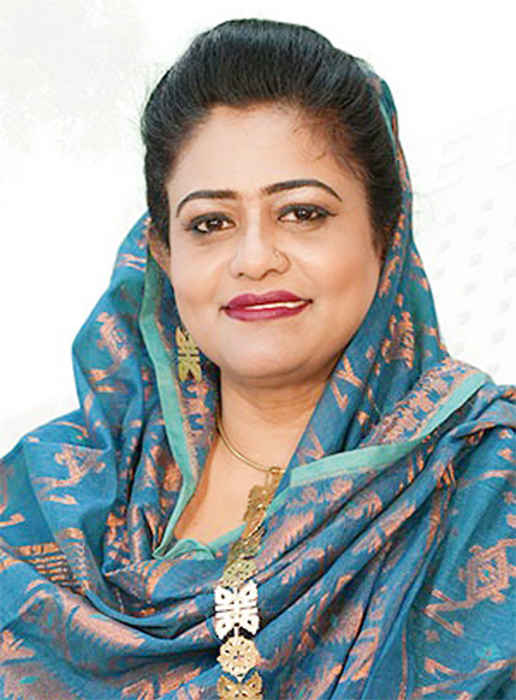
Ruba Rummana :
Bangladesh is a country where women comprise nearly half the population. Despite growing contributions by women-led enterprises, systemic issues continue to exist, the potential of female entrepreneurs remains mostly uncharted.
A focused women entrepreneurship development program is no longer a luxury but a need for Bangladesh’s long-term and inclusive overall progress.
In spite of their entrepreneurial aspirations, women in Bangladesh often encounter difficulties such as limited financing and social and cultural barriers that are deeply embedded in the society.
In this respect, men have greater mobility and networking opportunities, but women are unable to secure loans because they don’t own property which could be provided as security (mortgage) to have credit from their bank.
Furthermore, the customary gender roles of the women like cooking, child raising, household management etc. prevent women from utilizing their entire entrepreneurial potential in business.
These obstacles cannot be overcome solely through focused entrepreneurship programs. The essential element is a separate social psychological structure that was created with their specific requirements in mind which persist.
The Constitution of Bangladesh provides a sturdy basis for sound actions in this direction. As for example, Article 19(1) mandates the state to provide equality of opportunity to all citizens.
Article 28(2) prohibits sex-based discrimination, while Article 38 allows the state to make special provisions for women and children. The National Women Development Policy formulated 2011 seeks to increase economic empowerment of women. However, more effective institutional supports must be ascertained to achieve the goals.
In addition, to pace with the global development women entrepreneurs must be encouraged with the commitments of direct supports. In economic leadership, equal opportunities for all including women are part of SDG 5 (Gender Equality).
According to SDG 8, inclusive growth is the priority, while SDG 10 emphasizes reducing inequality and supporting underrepresented groups that provides including others special emphasis on women. Progress in inclusive growth can be significantly accelerated by providing at least equal opportunities for female entrepreneurs through targeted development initiatives.
The economics of investing in women entrepreneurs is worldwide a proven case that accelerates economic growth, promotes gender equality and emancipation especially of the traditional societies. According to studies done by the World Bank and UNDP, a significant increase in women’s participation in the economy leads to higher GDP growth rates.
Women invest up to 90% of their earnings in their families and communities. This promotes not only family health and wellbeing of the society but businesses and economic progress. Businesses own and run by women lower poverty, indorse creativity, create jobs and boost economic wellbeing.
To unlock this potential, the government must address:
# The lack of business-friendly social and economic environment for women.
# Safety in public spaces and markets,
# Failing establishment of women’s business centers, and
# Digital literacy.
Despite the global shift towards e-commerce, numerous rural women are still without smartphones and internet access. Policy focusing this issue and digital training to the rural women businesses will certainly enable them to integrate the new economy.
As Bangladesh claimed success in microfinance specially in women-oriented micro credit schemes, it must be studied whether such scheme could be applied to promote women business especially in rural and suburban areas. The SME Foundation or its equivalent in the Ministry of Women and Children Affairs could have a dedicated training team for women. This team may provide personalized training sessions/mentorships, safe networking opportunities, and startup financing. Such training could be very useful for localized solutions especially for women businesses from rural and suburban areas.
We should not adopt a one-size-fits-all approach to unlock Bangladesh’s economic potential. It is undoubtfully evident from the brief discuss above that investing in women entrepreneurs is not only an equitable decision but also for overall national development. The nation must provide the women businesses with the resources, space, training, moral and political supports and whole hearted appreciation those they need.
(The writer is Associate Professor, Department of Economics at Southeast University and Women’s Entrepreneurship Activist).