LDC Graduation: 16-point reform drive underway for smooth economic transition

Staff Reporter :
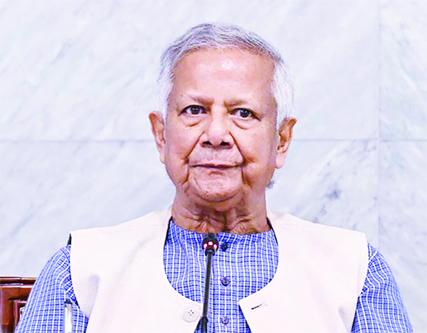
The interim administration, led by Chief Adviser Professor Muhammad Yunus, has launched a series of reform initiatives to prepare Bangladesh for its transition from Least Developed Country (LDC) status to a developing economy.
With the official graduation scheduled for 24 November 2026, the government is accelerating efforts to reform trade policies, boost export performance, and align with new global trade regulations that will come into force post-graduation.
At a recent high-level meeting held at the Chief Adviser’s Office in Tejgaon, Professor Yunus emphasised the need for urgent policy adjustments and sectoral assessments.
“We must act in our own interest and for the sake of our economy. We need to modernise policies and laws that are no longer fit for purpose,” he said.
He singled out the leather sector as an example of a missed opportunity due to insufficient evaluation and institutional support.
The meeting reviewed progress on 16 key policy decisions currently under implementation. Reports indicate that the National Board of Revenue (NBR) is responsible for four of these, the Ministry of Industries and the Ministry of Commerce for three each, the Economic Relations Division for two, and the Chief Adviser’s Office for four.
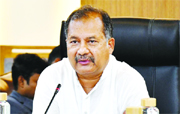
NBR Chairman Md. Abdur Rahman Khan provided updates on the roll-out of the National Single Window, noting that 19 agencies have already been integrated into the digital platform. He also outlined the implementation of the 2023 Tariff Policy action plan, aimed at streamlining customs procedures and facilitating trade.
Discussions also touched on expanding incentives – similar to those enjoyed by the ready-made garment (RMG) sector – to other export-oriented industries. These include proposals for duty-free access to raw materials and machinery, particularly for man-made fibre-based manufacturing.
Infrastructure issues were also on the agenda, including the operational readiness of the Effluent Treatment Plant (ETP) at Savar’s Tannery Village and the Active Pharmaceutical Ingredients (API) Park in Gazaria, Munshiganj. Updates to the 2022 Industrial Policy were also reviewed.
To drive these efforts, a 16-member inter-ministerial committee has been formed, chaired by the principal secretary to the chief adviser. The committee includes representatives from the Bangladesh Bank, the Ministries of Finance, Commerce, Foreign Affairs, Agriculture, Industries, Textiles and Jute, and Health Services Division, along with the NBR, Export Promotion Bureau, BSTI, DGDA, BSCIC, and FBCCI.
The committee is tasked with evaluating proposed support measures for four priority sectors: leather, jute, agro-processing and agriculture, and pharmaceuticals. It will assess the feasibility of implementing these measures and prepare a time-bound action plan. It is also authorised to recommend additional policy interventions as required.
This coordinated approach signals a renewed push to strengthen Bangladesh’s export competitiveness and economic resilience as the country prepares to graduate from LDC status.