
‘Consensus shared responsibility, not commission’s alone’
Staff Reporter :
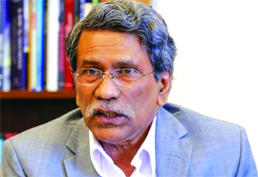
The Vice Chairman of the National Consensus Commission (NCC), Ali Riaz, emphasized yesterday that any failure to reach a political consensus through ongoing dialogue would be a “collective responsibility,” not the commission’s alone. His remarks came during the 14th day of the second round of dialogue between the NCC and representatives of over 30 political parties, held at the Foreign Service Academy in Dhaka.
“Therefore, if we fail, this failure is not the commission’s alone, but a collective responsibility,” said Riaz, addressing party representatives on Monday. “Success depends on achieving structural reforms through collective cooperation.”
Underscoring the NCC’s role, he noted, “The commission is not a separate entity – it is a partner in the efforts of political parties.”
The day’s discussions focused heavily on the proposed structure and functions of an upper house in a prospective bicameral legislature, one of the key reforms being considered in the broader national dialogue on constitutional restructuring and governance. This topic, already debated in three previous sessions, was revisited with detailed deliberations.
Participants also addressed women’s representation in the lower house, a matter several parties flagged as central to inclusive reform. Other complex constitutional matters – including the appointment process of the Chief Justice, the framework for a potential caretaker government, and conditions under which a state of emergency may be declared – are expected to be brought forward later in the day.
Ali Riaz, who presided over the session, urged party leaders to expedite the resolution of outstanding disagreements and called for a sincere understanding of their collective responsibility. “Preliminary discussions have achieved consensus on several matters,” he said, “but critical differences still require urgent attention.”
Joining the dialogue today were key NCC members Safor Raj Hossain, Justice Emdadul Haque, Badiul Alam Majumder, and Ayub Mia. Also participating were Transparency International Bangladesh Executive Director Dr Iftekharuzzaman and Chief Adviser’s Special Assistant Monir Haider.
Representatives from a wide array of political entities – including the Bangladesh Nationalist Party (BNP), Bangladesh Jamaat-e-Islami, National Citizen Party (NCP), Gono Odhikar Parishad, Ganosamhati Andolon, Communist Party of Bangladesh (CPB), Revolutionary Workers Party, and Amar Bangladesh (AB) Party – took part in the dialogue.
As the NCC enters the final stretch of its second round of discussions, expectations are high that the commission and political parties will bridge their remaining divides and move closer to a framework for a reformed and inclusive democratic order.
The ongoing dialogue series is seen as a critical effort to restore political trust and build a sustainable consensus-based governance structure in post-Awami League Bangladesh.