
Islamic Pensions: A faith-based path to financial security in retirement
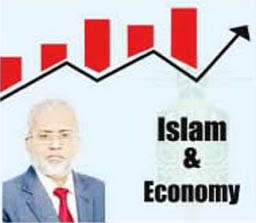
Dr. Md. Touhidul Alam Khan :
Retirement planning is a universal concern, transcending borders, cultures, and faiths. For Muslims, however, this critical aspect of financial security carries an additional layer of responsibility: ensuring that their retirement savings align with Islamic principles. In a world where conventional financial systems often conflict with Shariah guidelines, Islamic pensions have emerged as a beacon of ethical and faith-compliant retirement planning. These innovative financial instruments not only provide a safety net for the future but also uphold the moral and ethical values central to Islam.
The ethical foundations of Islamic pensions
At the heart of Islamic pensions lies a commitment to Shariah compliance, which distinguishes them from conventional retirement plans. Traditional pensions often involve elements of Riba (interest) or investments in businesses deemed Haram (prohibited), such as alcohol, gambling, or tobacco. Islamic pensions, on the other hand, operate within a framework that prioritizes ethical investments, risk-sharing, and mutual cooperation. This ensures that participants’ savings grow in a manner consistent with their faith.
Islamic pensions function on several core principles:
Contributions: Members make regular contributions to a pooled fund, managed by a professional fund manager. This collective approach fosters a sense of community and shared responsibility.
Investments: The pooled funds are invested exclusively in Shariah-compliant assets, such as halal businesses, real estate, or Sukuk (Islamic bonds). A Shariah board oversees these investments to ensure compliance with Islamic law.
Returns and risks: Profits generated from investments are distributed among participants based on pre-agreed ratios, while losses are shared according to each member’s capital contribution. This equitable distribution aligns with the Islamic principle of fairness.
Payouts: Upon retirement, disability, or death, beneficiaries receive either a lump sum or periodic payouts, providing financial security during life’s most vulnerable phases.
A diverse landscape of Islamic pension solutions
The growing demand for Shariah-compliant retirement solutions has led to the development of various types of Islamic pensions, catering to different needs and demographics. These include:
Islamic Individual Pension Plans: Popular in countries like Malaysia and the UK, these plans offer personalized retirement savings options. Participants enjoy flexibility in contribution amounts, investment choices, and retirement age, allowing them to tailor the plan to their specific goals.
Islamic Voluntary Pension Schemes: Offered in countries like Pakistan, these non-mandatory schemes allow individuals to make regular contributions to a diversified portfolio. They often come with tax benefits and the potential for higher returns, making them an attractive option for proactive savers.
Employer-Sponsored Islamic Pension Plans: Common in Gulf Cooperation Council (GCC) countries, these plans are part of employee benefits packages. Structured to comply with Shariah principles, they provide a seamless way for employees to save for retirement while adhering to their faith.
Government-Backed Islamic Pension Schemes: Countries like Saudi Arabia, Malaysia, and Indonesia have introduced state-run programs that are often mandatory or semi-mandatory. Funded by employee and employer contributions, these schemes offer retirement benefits while ensuring Shariah compliance.
Takaful-Based Pensions: Rooted in the concept of mutual cooperation, these plans involve participants contributing to a pooled fund, which is then used to provide retirement benefits. This model emphasizes collective responsibility and risk-sharing.
Sukuk-Linked Pension Plans: These plans invest primarily in Sukuk, Shariah-compliant fixed-income instruments known for their stability and low risk. They are particularly appealing to conservative investors seeking steady returns.
Hybrid Islamic Plans: Combining elements of Takaful, Sukuk, and equity investments, these plans offer a comprehensive retirement solution. They are gaining traction in the GCC and Southeast Asia, where investors seek diversified and robust options.
The rising tide of Islamic pensions
The global Islamic finance industry is on an upward trajectory, projected to reach a staggering 4.94 trillion by 2025. Within this ecosystem, Islamic pensions are experiencing remarkable growth, with assets estimated at over 4.94 trillion by2025. Within this ecosystem, Islamic pensions are experiencing remarkable growth, withassetsestimatedatover50 billion. Countries like Malaysia, Saudi Arabia, and the UAE are leading the charge, supported by robust regulatory frameworks and innovative products.
Malaysia’s Employees Provident Fund Islamic Savings Scheme, for instance, has attracted over seven million participants as of 2023. Similarly, Indonesia’s Pension Fund Shariah, launched in 2022, has amassed over 1.3 billion in assets. Saudi Arabia, under its social insurance framework, manages over 1.3 billion in assets. Saudi Arabia, under its social insurance framework, manages over 133 billion in assets, with a growing emphasis on Shariah-compliant investments.
Even in non-Muslim-majority countries, Islamic pensions are gaining traction. The UK’s Islamic pension market is valued at over 620 million, while South Africa’s market has surpassed 620 million, while South Africa’s market has surpassed 55 million in assets under management. These figures underscore the universal appeal of ethical and inclusive financial solutions.
Innovation and inclusivity: The future of Islamic pensions
The Islamic pension sector is not just growing; it is evolving. Innovations such as hybrid Takaful plans and ESG (Environmental, Social, and Governance)-compliant investments are broadening the appeal of these products. Additionally, the integration of cutting-edge technologies like blockchain and artificial intelligence is enhancing transparency and efficiency in fund management.
Sukuk-linked pensions, in particular, are witnessing a surge in popularity. With global Sukuk issuance reaching $850 billion in 2023, a significant portion is being allocated to pension funds. Countries like Malaysia, the UAE, and Bahrain are at the forefront of this trend, offering stable and Shariah-compliant returns to retirees.
In countries like Pakistan and Bangladesh, Islamic pensions are addressing the needs of low-income individuals and those in the informal sector. Pakistan’s voluntary pension system, for example, has attracted over 100,000 participants since its inception, with assets under management growing by 48.39% in 2024. These plans provide an accessible and ethical way for individuals to save for retirement, fostering financial inclusion.
A commitment to faith and future
Investing in an Islamic pension is more than a financial decision; it is a commitment to living a life aligned with one’s faith and values. By choosing Shariah-compliant retirement solutions, Muslims can ensure a dignified and worry-free retirement while contributing to a more just and equitable economy.
As awareness of Islamic pensions grows and the industry continues to innovate, these faith-based financial instruments are poised to become a cornerstone of global ethical retirement planning. In a world increasingly driven by ethical considerations, Islamic pensions offer a compelling vision of financial security rooted in faith, fairness, and mutual respect.
(Dr. Md Touhidul Alam Khan is the Managing Director & CEO of NRBC Bank PLC and fellow cost & management accountant from Institute of Cost & Management Accountants of Bangladesh (ICMAB).)