
From the Buriganga to the Yangtze: Bangladesh must harness rivers for development
Al Mamun Harun Ur Rashid :
Chief Adviser Prof Muhammad Yunus’ recent call to protect the country’s natural ecosystems is a timely and important reminder that development should never come at the expense of the environment.
Speaking on the ambitious Teknaf to Tetulia Integrated Economic Corridor Development project, supported by the Asian Development Bank (ADB), he emphasised the need to ensure that water bodies remain unharmed and uninterrupted.
In a nation shaped by rivers, nourished by floodplains, and defined by seasonal water flows, this is not merely a technical instruction—it is a matter of national survival.
Reminding us that Bangladesh is a deltaic land, he cautioned against disrupting the natural flow of water and stressed that our first priority must be to protect our rivers.
These words capture the central paradox of our time: how to grow economically without degrading the very systems that make growth possible.
The corridor project promises immense benefits—GDP growth within a decade, millions of jobs, and stronger trade routes with Nepal, Bhutan, and beyond. But if it ignores ecological realities, these gains could be short-lived.
Thankfully, we don’t have to look far for answers. Over the past decade, China—once criticised for environmental degradation—has emerged as a surprising global leader in ecological restoration. Its lessons can offer a powerful roadmap for Bangladesh, not to replicate but to adapt and transform.
Take the Pearl River, China’s third-largest waterway, once heavily polluted by decades of unregulated industrial growth. For years, its waters were toxic and lifeless, choking on untreated sewage and chemical runoff.
But starting in the early 2000s, Chinese authorities launched a rigorous cleanup campaign: investing in modern wastewater treatment, relocating polluting industries, enforcing stricter environmental laws, and restoring riverbanks with green zones.
As a result, water quality improved significantly, biodiversity returned, and cities like Guangzhou now boast vibrant, livable riverfronts that support the economy.
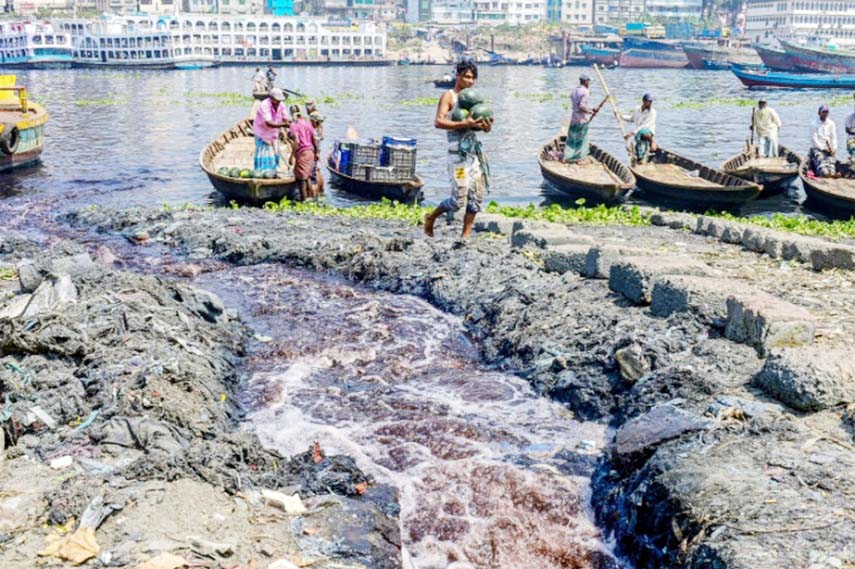
If China could revive a river once considered ecologically dead, so too can Bangladesh bring the Buriganga and Shitalakkhya back to life. As I was told during my visit to China last year, Pearl River authorities are now required to swim in it every year.
Alongside revival, China has also shown how to live in harmony with rivers. The Ming Jiang River in Sichuan has irrigated the Chengdu Plain for more than 2,000 years through the Dujiangyan irrigation system.
Designed in 256 BCE, this system diverts water without dams, enabling flood control and irrigation without disrupting natural flow.
It remains operational today, feeding millions and keeping the land fertile. This offers a powerful lesson for Bangladesh—especially for rivers like the Teesta, which still holds the potential to irrigate vast stretches of the north, if managed wisely.
At the same time, water diplomacy must be a key pillar of Bangladesh’s foreign policy. Shared rivers like the Teesta, Brahmaputra, and Ganges call for cooperative management among Bangladesh, India, and China—especially as climate change heightens water risks. With China expanding its role in South Asian water systems, trilateral dialogue is more vital than ever. Bangladesh must push for transparent, science-based cooperation to ensure fair water sharing and regional stability.
China’s broader environmental shift is equally instructive. Over the past decade, the country has invested over $1 trillion in ecological infrastructure, transforming cities and landscapes.
One of the most innovative programmes has been the “Sponge Cities Initiative,” launched in 2015 to help cities manage rainfall and flooding. In places like Wuhan, Xiamen, and Shenzhen, authorities built permeable roads, green rooftops, artificial lakes, and wetland parks that mimic natural hydrology.
These upgrades allow cities to absorb and reuse up to 70% of rainwater, greatly reducing urban flooding. In Wuhan, a $1.5 billion investment led to a 20% drop in flood losses in just a few years.
Dhaka has also invested in tackling waterlogging over the last decade, with Dhaka WASA spending over Tk 20 billion and the two city corporations contributing another Tk 7.3 billion. Yet the issue remains severe.
A World Bank study estimates that between 2014 and 2050, waterlogging could cost Dhaka Tk 110 billion if unaddressed—and up to Tk 139 billion under intensified rainfall.
In Chattogram, waterlogging caused Tk 514 crore in losses at Khatunganj market in 2020, with annual losses ranging from Tk 123–514 crore. Sylhet spent over Tk 1,500 crore in the last decade on flood control, yet damages persist. Dhaka, Sylhet, and Chattogram—where millions face waterlogging yearly—could adopt China’s model to better manage floods and water stress.
China’s 2021 Yangtze River Protection Law—the first to safeguard an entire river basin—limits harmful industry and prioritises ecological restoration along a river vital to nearly 45% of China’s GDP.
These examples show that rivers are not obstacles but vital economic arteries—a mindset Bangladesh must adopt. To protect rivers like the Buriganga, Meghna, Karnaphuli, and Teesta, we must move beyond short-term use and enforce strong, science-based protections.
With smart planning, the Teknaf to Tetulia corridor project could avoid the ecological errors of the past—like the infamous Haor road embankment in Kishoreganj, which disrupted water flows and worsened flooding—and instead become a model of how to integrate green principles into mega infrastructure.
During the meeting in the capital, Professor Yunus also emphasised that as children of nature, we should not destroy it, but strive to live in harmony with it.
And if China — a country of 1.4 billion people and industrial might — can clean rivers, revive ecosystems, and integrate ecology into growth, then Bangladesh, with its creativity, resilience, and community wisdom, can do it too.
(The Writer is a Diplomatic Correspondent, The New Nation)