
London deal clouds consensus process
Abu Jakir :
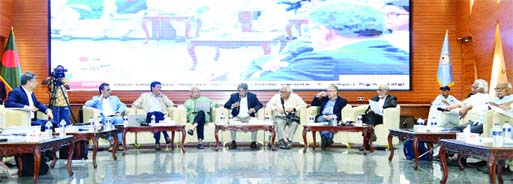
As the National Consensus Commission continues its push to build broad-based political agreement on democratic reforms and the roadmap to the next general election, the absence of Bangladesh Jamaat-e-Islami from Tuesday’s dialogue marked a notable setback in the ongoing process.
Jamaat’s non-participation in the second phase of talks, held at the Foreign Service Academy in Dhaka, highlighted simmering tensions between the party and the interim government led by Chief Adviser Professor Muhammad Yunus. According to commission sources, Jamaat expressed dissatisfaction following the government’s recent joint statement with BNP Acting Chairman Tarique Rahman during a London meeting-an act the party reportedly perceived as exclusionary, prompting its decision to boycott Tuesday’s session.
Despite the development, the Chief Adviser’s Press Secretary, Shafiqul Alam, remained optimistic. “We have communicated with Jamaat-e-Islami and hope they will take part in tomorrow’s discussions,” he told journalists at a briefing on Tuesday afternoon.
When asked about allegations of bias in the commission’s approach, Shafiqul reiterated the government’s commitment to neutrality. “Every political party that played a role in the recent mass movement is equally important. The Consensus Commission is striving to remain impartial in facilitating these critical reform talks,” he stated.
He added that the commission was unaware of the exact reason behind Jamaat’s absence but had held discussions with the party and remained hopeful of its return to the table.
While Jamaat’s absence drew attention, other participating groups also voiced concerns over the inclusivity and direction of the dialogue process.
During a break in the day’s session, National Citizens Party (NCP) leader Ariful Islam questioned whether the participating parties truly reflected the breadth of public sentiment. “If the parties present here today genuinely represented the people, the earlier 54-party alliance would have achieved more before the mass uprising,” he remarked.
Ariful further criticised the exclusion of non-political actors, saying, “This movement was not solely led by political parties. Students, professionals, and ordinary citizens were at its core-yet they are missing from this forum.”
He also alleged that the invitation process may have been influenced by the recommendations of larger political parties. “There’s concern within our party that certain voices are being sidelined, and sometimes, differing views are met with resistance rather than open dialogue,” he said.
The NCP reiterated its support for constitutional reform, including the direct election of reserved women’s seats and amendments to Article 70 to allow MPs greater freedom in voting, barring confidence motions and money bills.
In a related development, Islami Andolon Bangladesh’s leader, Mufti Syed Muhammad Rezaul Karim (Charmonai Pir), criticised the Chief Adviser’s recent overseas political engagements.
“You cannot decide the future of the nation through talks with one political figure abroad,” he said at a party event in Mymensingh, referring to Professor Yunus’s meeting with Tarique Rahman in London.
Mufti Rezaul also questioned the push for elections by December, warning that such calls appeared externally driven. “Elections must follow meaningful reforms and accountability. Demands for a rushed vote do not align with the country’s current reality,” he cautioned.
With Jamaat’s absence and other parties raising concerns over process and representation, the prospects for unified consensus remain uncertain. Whether the next round of talks-scheduled for Wednesday-will bridge these divides or deepen the fault lines between the interim government and various political forces remains to be seen.