
Migrant deaths spikes in 2024 amid global attention
Staff Reporter :
The number of Bangladeshi migrant workers who died abroad reached a record 4,813 in 2024, a 5.7 percent increase from the previous year due to the lack of global concern. The report presented at a policy dialogue in Dhaka on Wednesday.
Drawing on a decade of data from the Bureau of Manpower, Employment and Training (BMET) and the Wage Earners’ Welfare Board (WEWB), the report points to serious shortcomings in death verification, family support, and repatriation practices.
Md Nurul Islam, former BMET director, presented the findings at the event, jointly organised by the Refugee and Migratory Movements Research Unit (RMMRU) and the National Human Rights Commission (NHRC).
Between 2012 and 2024, over 40,700 bodies of migrant workers were repatriated to Bangladesh.
The report raised alarm over frequent misclassification of causes of death, lack of independent autopsies, and cases where workers were buried abroad without family consent.
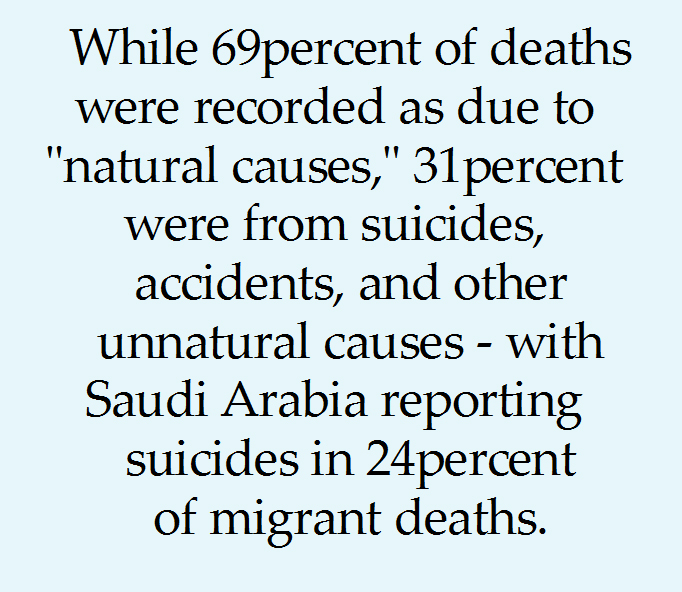
While 69percent of deaths were recorded as due to “natural causes,” 31percent were from suicides, accidents, and other unnatural causes – with Saudi Arabia reporting suicides in 24percent of migrant deaths. The average age of deceased workers was just 38.
Female migrants, primarily domestic workers, showed a higher percentage of unnatural deaths, particularly in Gulf and Southeast Asian countries, with 32percent dying from accidents, murders, or suicides.
Nearly half of affected families said they did not trust the official cause of death.Families also reported bureaucratic obstacles and insensitive treatment during the repatriation process. Over 80percent struggled with paperwork, and many experienced mistreatment at the Dhaka airport.
The report criticised the lack of global attention on migrant deaths and urged mandatory autopsies in Bangladesh, second autopsies abroad when needed, and streamlined repatriation procedures.
Additional support for bereaved families, particularly of female workers, and stronger health screenings and training were also recommended. With coordinated reforms, the report stressed, many of these avoidable deaths could be prevented.