
BD, Japan ink manpower, infrastructure deals
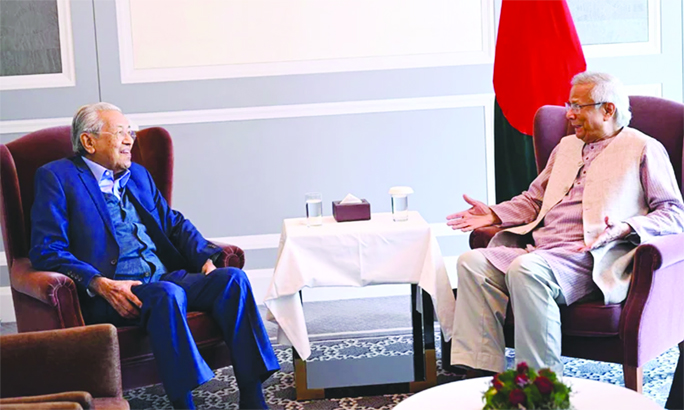
Staff Reporter :Tokyo has announced plans to recruit over 100,000 Bangladeshi workers over the next five years in a landmark development signaling deepening ties between Bangladesh and Japan, even as Dhaka unveiled ambitious proposals to transform its coastal south through the Moheshkhali-Matarbari Integrated Development Initiative (MIDI).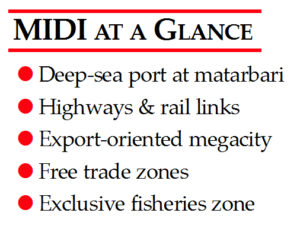
The dual announcements were made during the “Bangladesh Seminar on Human Resources” and the 30th Nikkei Forum: Future of Asia, both held in Tokyo, where Chief Adviser Professor Muhammad Yunus played a central role in advocating for Bangladesh’s economic and strategic interests.
At the Toshi Kaikan conference hall, Professor Yunus oversaw the signing of two crucial Memoranda of Understanding (MoUs) that pave the way for large-scale labour migration to Japan.
The first agreement was signed between Bangladesh’s Bureau of Manpower Employment and Training (BMET) and Kaicom Dream Street (KDS), a Japan-Bangladesh joint venture.
The second included BMET, the National Business Support Combined Cooperatives (NBCC)-a federation of over 65 Japanese companies-and the Japan Bangla Bridge Recruiting Agency (JBBRA).
“Bangladesh has vast potential with its youthful population,” said Professor Yunus. “The government’s job is to open the door for them, and today we begin that journey.”
NBCC Chairman Mikio Kesagayama confirmed Japan’s readiness to recruit over 100,000 workers from Bangladesh by 2030, while senior Japanese corporate leaders expressed strong interest in upskilling and integrating Bangladeshi workers.
However, stakeholders noted challenges such as a shortage of Japanese language instructors in Bangladesh. Japanese officials, including State Minister of Health, Labour and Welfare Niki Hirobumi, acknowledged the urgency of importing foreign labour, as Japan’s population continues to decline.
As of June 2024, the number of Bangladeshis in Japan rose to 31,536, up from 18,055 in December 2021 a nearly 75 percent increase in less than three years.
In a separate but strategically linked meeting at the Imperial Hotel, Professor Yunus met with JICA President Dr. Tanaka Akihiko to push for accelerated development of the MIDI region-a vast coastal corridor that includes Matarbari, Moheshkhali, and adjoining districts. Describing MIDI as “the future of Bangladesh,” Professor Yunus outlined a vision that includes: a deep-sea port at Matarbari, modern highways and rail links connecting the Bay of Bengal with Nepal and Bhutan, an export-oriented megacity, featuring free trade zones and large-scale industrial investment, an exclusive fisheries zone with capacity for deep-sea fishing and onshore processing facilities “Our trawlers are too small, and our seafood is being taken by others.
That must change,” Yunus said, announcing plans for major upgrades in maritime capacity.
Dr. Tanaka, impressed by the long-term planning, reaffirmed JICA’s support but called for faster decision-making and streamlined coordination.
In response, Professor Yunus committed to appointing a senior national coordinator to oversee all MIDI-related initiatives.
Beyond economic cooperation, the two sides also discussed: Anti-corruption reforms under the interim government, the timeline for general elections between December 2025 and June 2026, the Rohingya refugee crisis, with Yunus urging greater Japanese support Dr. Tanaka expressed JICA’s willingness to collaborate on humanitarian relief and regional stability efforts.
As Bangladesh navigates a delicate political transition, Professor Yunus’s visit to Japan appears to mark a turning point-linking labour diplomacy with infrastructure transformation, and bridging short-term employment opportunities with long-term strategic development. “With Japan’s support, we can rewrite our future,” Yunus declared.