Farakka Treaty and desertification in Bangladesh

Prof Dr. Ahmad Kamruzzaman Majumder:
The Farakka Treaty is a significant political, diplomatic, and environmental issue for Bangladesh. It is a historic document on the sharing of water between Bangladesh and India. The multifaceted aspects of the surrounding environment, politics, economy, and history are reflected in this treaty, which goes beyond a simple bilateral water-sharing agreement. West Bengal, India’s Murshidabad district, is home to the Farakka Barrage. Rerouting the Ganges River’s flow to make the Hooghly River navigable again originated during British colonial control. Five significant surveys were carried out to revive the Hooghly River between 1851 and 1946. Based on these surveys, India intended to build the Farakka by rerouting water from the Padma River into the Bhagirathi-Hooghly River via a feeder canal.
The district of Murshidabad was included in India because of its geographical significance in relation to the river system, despite the partition of India being based on religious majority. This is an obvious example of “river-centric diplomacy.” East Pakistan (now Bangladesh), on the other hand, was unaware of this approach’s long-term effects, which cost Bangladesh dearly in terms of food production and environmental balance, including harm to the Sundarbans.
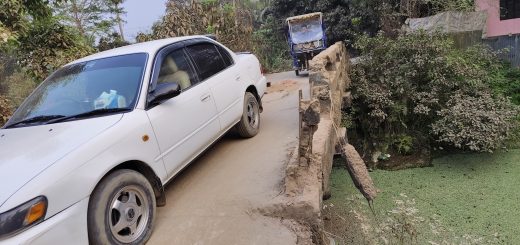
As early as 1951, Pakistan, which at that time encompassed East Pakistan, voiced opposition to India’s plan. India retorted that no one would be harmed because the project was still in its early stages. But with the Soviet Union’s assistance, India finished the barrage by 1970, spending around $1 billion. India operationalized the barrage on a trial basis on April 21, 1975. As a result, Bangladesh had acute water scarcity throughout the dry summer months, particularly in the provinces of Rajshahi, Kushtia, and Khulna. Desertification, increased erosion, saline intrusion, and lower river depth resulted from the Ganges’ sharp decline in flow into Bangladesh. Public life, biodiversity, navigation, agriculture, and fisheries were all adversely affected.
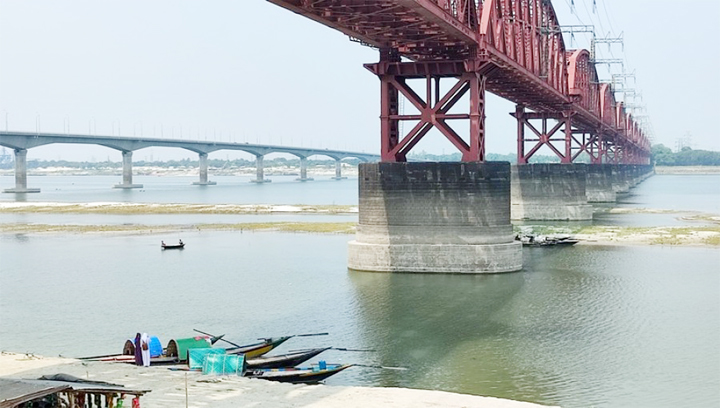
Surprisingly, the Indian states of West Bengal and Bihar also suffered from waterlogging, river erosion, and flooding due to silt accumulation. Thousands of people were left homeless and displaced in areas like Malda and Murshidabad; many of them went on to live in Indian towns after being mistakenly recognized as “Bangladeshi infiltrators.” Experts predict that a “new Padma” may form as a natural reaction to India’s water politics if the Ganges River continues to erode eastward and eventually joins the Padma River through the Kalindi and Mahananda rivers.
Bangladesh initially sought a solution to the problem through bilateral negotiations. In 1977, a five-year temporary agreement was signed and extended in 1982 and 1985. But when India persisted in its unilateral water removal, Bangladesh brought up the matter at the 1976 UN General Assembly. India was compelled to negotiate by international pressure, even though no quick solution was found. Following extensive negotiations, Indian Prime Minister H.D. Deve Gowda and Bangladeshi Prime Minister Sheikh Hasina signed the Farakka Treaty, a 30-year Ganges Water Sharing Agreement, on December 12, 1996.
According to this deal, the two nations will exchange water according to a specified schedule throughout the dry season, from January to May. Both parties must negotiate if the flow goes below 75,000 cusecs; third-party involvement is permitted if it falls below 70,000 cusecs.
Even though Bangladesh views the deal as a diplomatic victory, implementing it has not been easy. Bangladesh has had water shortages for agriculture, especially in April and May, due to India’s sporadic violations of the agreement by taking extra water. This damages the ecology and reduces crop productivity. The transparency and accuracy of India’s water flow figures have also drawn criticism. River water is more than just a natural resource; it is essential to livelihoods, the economy, the environment, and food security. In addition to being an environmental concern, ensuring equitable water distribution is a fundamental human right and a matter of national sovereignty.
Bangladesh is also concerned about India’s internal “River Interlinking Project.” This project may interfere with the transboundary rivers’ natural flow by rerouting water from the Ganges and Brahmaputra rivers to various parts of India. International law states that the usage of water by one nation shall not cause harm to another. Bangladesh maintains that unilateral withdrawals of water from international rivers are unacceptable. This claim is grounded in natural justice and international law, not just politics.
Implementing a concerted water diplomacy that addresses at least 54 transboundary rivers, such as the Ganges, Teesta, Dharla, Manu, Khowai, and Gomti, is crucial. Northern Bangladesh’s agricultural areas are still impacted by the Teesta accord, which has been in the works for a long time. Experts emphasize that Bangladesh must take strategic measures, particularly because the Farakka Treaty’s 30-year term ends in 2026. Bangladesh must advocate for reassessing the Farakka Treaty, guaranteeing accountability and transparency in its execution, and building confidence in cooperative monitoring and data exchange systems. A framework for river management that is egalitarian, sustainable, and scientific must also be created. A nation’s food security, biodiversity, environment, and cultural history are all carried by its rivers, which are more than just waterways. The Farakka Treaty was a historic start, but the state of affairs demands structural changes. Bangladesh needs to start making strategic plans, start fresh discussions with the international community, and foster national agreement on river-based development since the treaty expires in 2026.
The Farakka Treaty was a step, but not a permanent solution. It is no longer necessary to revisit the treaty; it has become a pressing national duty. History has shown that rivers can alter destinies just as the blockage of the Padma once gave rise to new environmental politics. To prevent Bangladesh’s history from being rewritten in the waters of the Ganges, the country must assert its sovereign rights over water, demand a scientifically grounded distribution policy, and open new horizons for regional cooperation.
(The writer is Dean, Faculty of Science, Professor, Department of Environmental Science, Stamford University Bangladesh).