
Revitalizing Islamic banking in Bangladesh: A call for comprehensive reforms

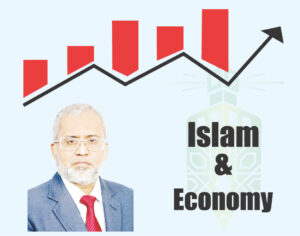 Dr. Md. Touhidul Alam Khan
The Islamic banking sector in Bangladesh stands at a critical juncture, grappling with challenges that demand urgent and strategic reforms.
While the conventional banking sector faces difficulties, Islamic banks are navigating an even more complex landscape, often hindered by weaknesses in Shariah governance systems and regulatory frameworks.
This editorial underscores the pressing need for reforms to enhance Shariah compliance, governance, and regulatory oversight, ensuring the resilience and sustainability of Islamic banking in Bangladesh. Without decisive action, the sector risks losing its credibility and failing to meet the growing demand for ethical financial solutions.
At the core of this reform agenda is the role of Bangladesh Bank, the central regulatory authority, whose actions will determine the future trajectory of Islamic banking.
Despite being an integral part of Bangladesh’s financial ecosystem for over four decades, Islamic banking has long suffered from the absence of a dedicated department within Bangladesh Bank.
This gap has led to coordination challenges, regulatory inadequacies, and insufficient supervision of Islamic banking operations. Establishing a specialized department, staffed with professionals well-versed in Islamic finance and supported by an advisory committee of experts, is a crucial first step.
Such a department would streamline operations, align regulations with international standards, and strengthen supervisory mechanisms, thereby fostering a more robust and transparent Islamic banking sector.
Overhauling outdated regulatory frameworks
One of the most pressing issues facing Islamic banks in Bangladesh is the outdated regulatory framework that governs their operations. Current regulations fall short of evolving international standards, exposing the sector to significant risks and eroding investor confidence.
To address this, Bangladesh Bank must undertake a comprehensive revision of these regulations. Key areas of focus should include clear definitions of Shariah-compliant products, robust governance structures, effective risk management practices, and transparent financial reporting.
By aligning local regulations with global benchmarks and appointing qualified individuals to regulatory committees, Bangladesh can build trust among investors and attract international financial institutions that have previously been hesitant to engage in a regulatory environment perceived as uncertain.
Strengthening Shariah governance
The effectiveness of Shariah committees is another critical area requiring immediate attention.
These committees play a pivotal role in ensuring the integrity of Islamic banking operations, yet recent scandals have raised serious concerns about their independence and effectiveness.
Many Shariah committees have issued “no objection” reports even in the face of evident governance failures, highlighting a need for reform.
To restore credibility, these committees must broaden their focus beyond mere compliance with religious guidelines to include the economic and social implications of financial decisions. Enhancing the educational qualifications and expertise of Shariah committee members is essential.
This could involve curriculum reforms in madrasas and specialized training programs to equip members with a deeper understanding of both Islamic principles and modern financial practices.
Learning from global best practices
Bangladesh can draw valuable lessons from countries that have excelled in Islamic finance, such as Malaysia and Bahrain. In these nations, Shariah committee members often hold advanced degrees in Islamic studies, economics, and law from reputable institutions.
Bangladesh can emulate this model by implementing initiatives to elevate the knowledge and expertise of its Shariah committee members.
Measures such as external Shariah audits and transparent reporting systems can further enhance public confidence in the integrity of Islamic financial institutions. By adopting global best practices, Bangladesh can position itself as a competitive player in the global Islamic finance landscape.
Reforming the Islamic capital market and insurance sectors
The Islamic capital market and insurance sectors are integral components of the broader Islamic finance ecosystem and must also undergo comprehensive reforms.
These sectors play a complementary role to Islamic banking, offering Shariah-compliant investment products that cater to the growing demand for ethical financial solutions.
In particular, there is a need for innovative products in areas such as retirement planning and short-term investments. By reshaping these sectors to meet consumer demands, Bangladesh can create a more inclusive and dynamic Islamic finance ecosystem that serves the diverse needs of its population.
A multi-dimensional approach to reform
The revitalization of Islamic banking in Bangladesh requires a multi-dimensional approach that prioritizes regulatory reforms, enhances governance structures, and fosters transparency across the sector.
This includes establishing a dedicated regulatory body, updating outdated regulations, strengthening Shariah governance, and learning from successful models in other countries.
Additionally, reforms must extend to the Islamic capital market and insurance sectors to ensure a holistic and integrated financial ecosystem.
Islamic banking in Bangladesh has the potential to become a cornerstone of the nation’s financial system, offering ethical and Shariah-compliant solutions that align with the values of its predominantly Muslim population.
However, realizing this potential requires decisive action and a commitment to comprehensive reforms. By addressing regulatory shortcomings, enhancing Shariah governance, and drawing on global best practices, Bangladesh can build a resilient and sustainable Islamic banking sector that meets the socio-economic aspirations of its people.
The time for action is now. With strategic interventions and a focus on transparency and accountability, Bangladesh can position itself as a leader in Islamic finance, fostering economic growth and financial inclusion while adhering to ethical and Shariah principles.
The future of Islamic banking in Bangladesh is bright, but only if stakeholders work together to address the challenges and seize the opportunities that lie ahead.
(Dr. Md Touhidul Alam Khan, FCMA, CSRA, is a seasoned banking professional with expertise in financial management, corporate governance, sustainable banking, and strategic planning. He also holds a Postgraduate Diploma in Islamic Banking and Insurance from the Institute of Islamic Banking & Insurance (IIBI) in the
United Kingdom).