
Public Admin Reform: New federal-style governance proposed
Abu Jakir :
The Public Administration Reform Commission has recommended the creation of a federal government-controlled ‘Capital City Government,’ modelled on India’s Delhi, as part of a wider structural reform of governance in Bangladesh.
This information was disclosed by the Chief Adviser’s Deputy Press Secretary, Mohammad Abul Kalam, during a media briefing at the State Guest House Jamuna on Wednesday afternoon.
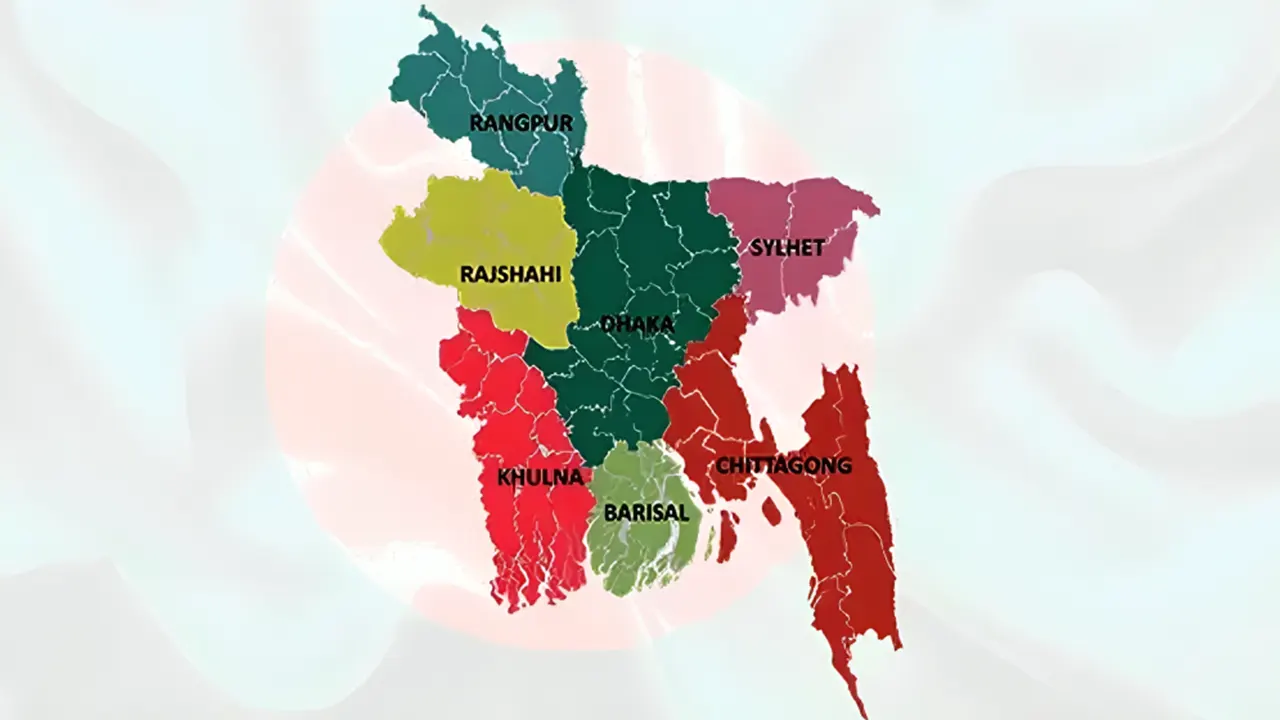
The commission’s recommendations also include transforming four old divisions into provinces and reducing the number of ministries and directorates to 25 and 44, respectively.
According to the commission’s report, the proposed ‘Capital City Government’ would address the unique administrative and infrastructural demands of Dhaka and its surrounding areas, given its dense population and growing service needs. The proposed jurisdiction would include Dhaka city, Tongi, Keraniganj, Savar, and Narayanganj.
This new administrative entity would feature an elected legislature and a local government system, similar to the provincial governments proposed under the envisioned federal structure.
Earlier in the day, both the Public Administration Reform Commission and the Judiciary Reform Commission submitted their recommendations to the interim government’s Chief Adviser, Professor Muhammad Yunus.
The commission has proposed renaming several key positions within the administrative framework including the Deputy Commissioner (DC) would be renamed as District Magistrate and District Commissioner.
The Upazila Executive Officer (UNO) would be re-designated as Upazila Commissioner. The Additional Deputy Commissioner (Revenue) would be renamed Additional District Commissioner (Land Management).
Under the reforms, District Commissioners would be empowered to accept and process certain types of legal complaints, particularly those related to Court Registrar (CR) cases. They would have the authority to direct Upazila officials or local influencers to arbitrate or conduct preliminary investigations.
If a complaint is deemed valid, the District Commissioner could instruct law enforcement to formally register the case. Once registered, it would proceed to the courts following due process. The commission suggests that this system could make legal recourse more accessible for ordinary citizens while alleviating the burden of minor disputes on the formal judicial system.
To avoid duplicative litigation, once a case is resolved through this mechanism, the complainant would not be permitted to file it again in court. The commission has recommended consulting the Supreme Court prior to implementing this measure.
The commission has also proposed reinstating civil and criminal magistrate courts at the Upazila level, which it believes would greatly benefit the general population. Supreme Court consultation has been recommended before finalising this measure.
To strengthen law enforcement oversight at the Upazila level, the commission has suggested creating a new position titled ‘Upazila Public Safety Officer’. This role would be filled by an Assistant Superintendent of Police (ASP), tasked with supervising the Officer-in-Charge (OC) of the local police station and overall law enforcement operations in the area.
The commission has proposed renaming the BCS Administration Cadre as the Bangladesh Administrative Service. Under the new structure, field administration would continue to be handled by the Bangladesh Administrative Service. Secretariat functions would be managed by a newly proposed Superior Executive Service (SES), which would comprise officials from the rank of Deputy Secretary to Additional Secretary.
Half of the Deputy Secretary positions in SES would be reserved for administration cadre officials, while the remaining half would be open to officers from other services.
(Reform Commission Report on Judiciary in page-12).