
Barrister Mainul: A true patriot, a champion of democracy
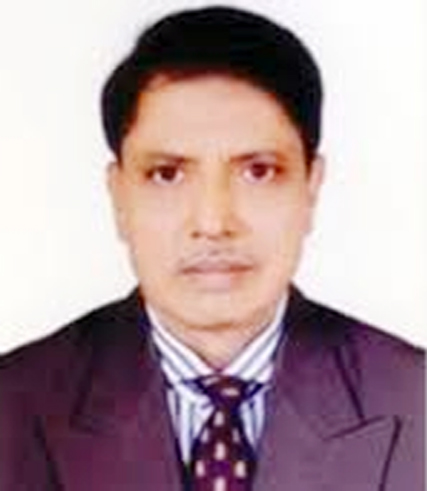
Dr. Forqan Uddin Ahmed :
Barrister Mainul Hosein, the eldest son of the country’s legendary journalist Tofazzal Hossain (Manik Mia), was the youngest member in the Bangladesh Parliament of 1973 elected from the Bhandaria-Kathalia (Barishal) village constituency. Since then he continued to speak out against any oppressive laws and human rights violations in the country till his death.
When the government modified the basic nature of the Constitution in 1975 to introduce a one-party system (BAKSAL), it was a major difficulty for him not to support Bangabandhu. At the same time, he couldn’t abandon his trust in democracy. So he opted to quit from Parliament, together with Bangabir General MAG Osmani. Barrister Mainul Hosein served as president of the Supreme Court Bar Association of Bangladesh from 2000 to 2001. He was elected president of the Bangladesh Sangbadpatra Parishad multiple times and a member of the Press Council, and in both positions, he made a significant contribution to the development of positive relationships between journalists and newspaper owners. Additionally, Mr. Hosein was the second most significant member of the Press Commission, which was the first of its kind in Bangladesh. Mr. Hosein, Mr. Gazi Shamsur Rahman, the chairman of the Press Council, and Mr. Ataur Rahman Khan, the previous prime minister of Bangladesh, were instrumental in completing the Press Commission Report, which is the legislative basis for press freedom. A major political impasse over the conducting of the general elections occurred in 2007. A state of civil war reigned once the civilian administration fell. The imposition of martial law was inevitable.
To avoid martial law and safeguard the constitutional process, Barrister Hosein reluctantly consented to join the army-backed caretaker administration in 2007. He believed that the army should be assisted in avoiding the imposition of martial law. Even under the restraints of an emergency scenario, he approved the statute separating the judiciary from the executive during his one-year term, something that politicians had failed to achieve since the 1972 constitutional pledge. The Bangladesh Code, which consists of 38 volumes, has completed the codification of all Bangladeshi legislation. During this time, the Anti-Corruption Commission achieved entire independence. The Election Commission received more resources. All of this was done to strengthen the foundations of democracy. Barrister Hosein documented the role he attempted to play during the caretaker administration by publishing the book ‘Wanted Success of Democracy.’ He was vociferous about his belief that the election will be stolen in 2018, and an excuse was devised to keep him in jail during the election, which was done unlawfully. The election was in fact rigged.
Barrister Mainul Hosein has a lifelong commitment to democracy and the rule of law, earning him a special place in the hearts of peace-loving individuals in Bangladesh. He is widely respected for his legal skills and has a long and esteemed career as a barrister, known for defending notable cases and providing important legal opinions on national issues. His deep understanding of constitutional law and ability to handle complex legal matters make him well regarded in the legal community. As a former adviser to the caretaker government, he demonstrated his legal and administrative abilities by managing key portfolios like law and information. Many legal professionals view him as a principled lawyer who made significant contributions to Bangladesh’s legal system. His book, “Bangladesh: Tragedy of Deceit and Duplicity,” critically examines the deceptions in politics and democracy. Hosein writes that the book aims to encourage collective introspection on the challenges facing Bangladesh rather than assigning blame.
Bartster Hosein was a strong advocate of the 15th amendment to the Constitution, which abolished the caretaker government system in 2011, based on the recommendations of then-prime minister Sheikh Hasina. He consistently opposed the autocratic rule of Sheikh Hasina, particularly after the one-sided national election of 2014. He was also very critical of the much-propagated development of Hasina administration. Mainul was a strong critic of the midnight election in 2018 and urged Hasina to resign and hold free, fair, and participatory elections for the greater good of the country and the welfare of its citizens. Barrister Mainul called those elections (of 2014 and 2018) ‘voterless voting’ in his writings over the years. In this context, I like to highlight an explanation of the deception of democracy and corruption in his own words as depicted in the following quotation of the abovementioned book. It is portrayed as, “Our present challenge is to prove that we deserve to be a free nation and not the shame of indignity of losing our rights and even our right to vote. We could have won independence honorably by tactfully playing the political cards with Mr. Bhutto in good humor.”
In 2022, I met him in his Kakryl’s office over a cup of tea, a year before his death. He very cordially and nicely shared a brief concept of state, good governance, democracy, and the future of Bangladesh. I was amazed to hear the voice and significance on human rights and rule of law. Before I departed, he presented me a book titled “Bangladesh: Tragedy of Deceit and Duplicity” as a token of love and compliments. Today I remember him with respect and pay my special tribute to this great man. On the occasion of his first death anniversary, the nation mourns for his departed soul. He will be ever memorable to the people of Bangladesh for his dedication to democracy. He will be treated as a historical legend of Bangladesh. Barrister Mainul is certainly beloved to us as “The Hero” for democracy, free press, and an independent judiciary.
(Dr. Forqan is former Deputy Director General, Bangladesh Ansar and VDP)