
Governor Mansur rejects Moody’s ratings as outdated
Staff Reporter :
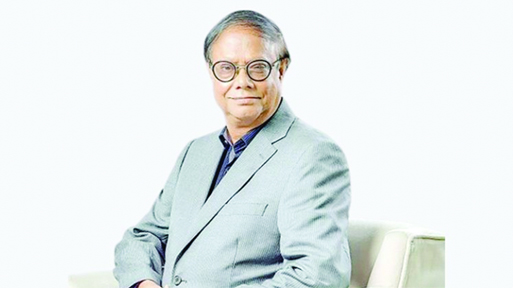
The recent ratings on Bangladesh by international rating agency Moody’s reflect an outdated perspective of the country rather than the current reality, according to Bangladesh Bank Governor Ahsan H Mansur. Speaking yesterday, Mansur described the ratings as inaccurate.
His comments followed a statement by Bangladesh Bank (BB) on 22 November, which criticized Moody’s recent ratings for failing to capture the positive political and economic developments in the country following the mass uprising and the formation of an interim government led by Nobel laureate Professor Muhammad Yunus.
The statement highlighted that in July 2024, Bangladesh experienced a historic political transformation driven by a student-led uprising with widespread public support.
In August 2024, an interim government was formed, backed by the mass movement and supported by all major political parties.
This government has since undertaken significant reforms in key areas, including the economy, law and order, anti-corruption measures, democratic and electoral processes, and public administration.
To address economic and financial challenges, BB has implemented a series of robust measures.
These include forming three task forces to conduct a comprehensive review of bank asset quality, spearheading a banking-sector reform programme, enhancing the operations of BB, and initiating efforts to recover stolen assets both domestically and internationally.
The central bank also noted that the government has established a national task force to re-strategies the economy and mobilize resources for equitable and sustainable development.
These task forces have already begun their work, engaging extensively with stakeholders.
Despite these efforts, Moody’s downgraded Bangladesh’s ratings on 19 November, moving it from B1 to B2 and maintaining the short-term issuer rating at “Not Prime”.
The agency also revised its outlook for Bangladesh from stable to negative.
Explaining the downgrade, Moody’s cited heightened political risks and the potential for slower economic growth.