
Environmental crisis deepens: Damage to Karnaphuli River from burnt sugar molasses continues
Staff Reporter :
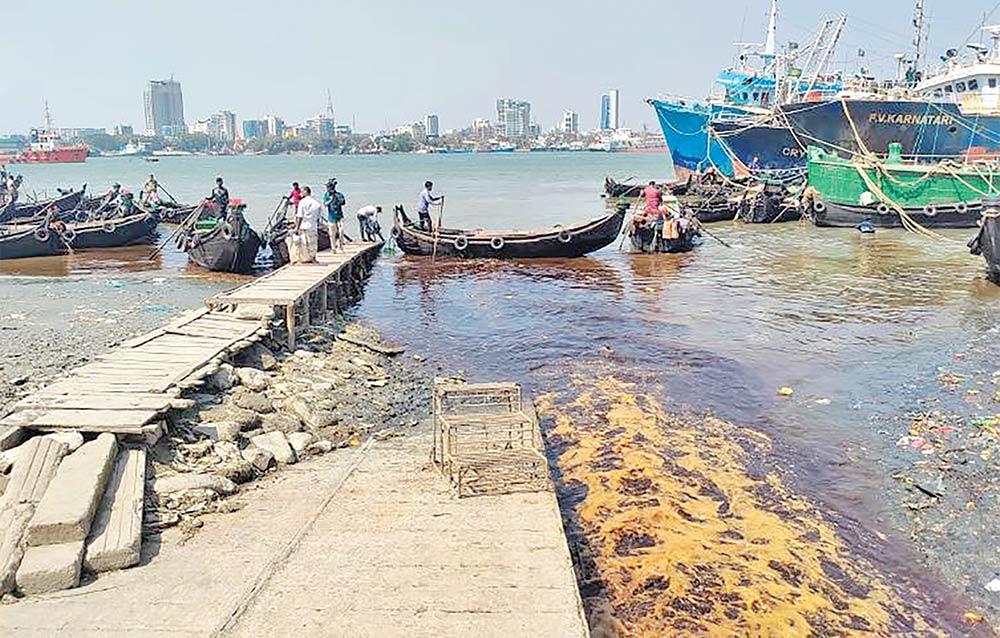
The aftermath of the burnt sugar molasses is persisting in the Karnaphuli River, with the effluent consistently blending into the water and resulting in the demise of numerous aquatic species.
The District Fisheries Office in Chattogram has identified 11 species affected by this issue, primarily lobsters and Gulsha fish, owing to the significant drop in oxygen levels.
Presently, the oxygen level in the river stands alarmingly low at 2.8 parts per million (PPM), significantly below the optimal range of 4 to 6 PPM, as reported by the District Fisheries Office.
Shrivas Chandra Chand, District Fisheries Officer in Chattogram, stressed the urgent necessity to cease the effluent flow from the S Alam Refined Sugar Mills to curb further contamination of the river water.
“The recovery from the severity of damages presents formidable challenges, given the extensive spread of burnt molasses across the vast water bodies. Immediate action is essential to elevating oxygen levels necessary for the survival of fish,” Chand conveyed to the New Nation on Thursday.
He added, “Our findings indicate the demise of 11 species of aquatic life so far. The uninterrupted effluent flow must be halted immediately to avert further devastation to aquatic species.”
In addressing the daunting task of restoring the river’s water, Chand remarked, “It is indeed a monumental challenge.
We are constrained by limited resources and logistical support. One potential approach is to introduce calcium carbonate into the water, yet the sheer scale of the body necessitates an impractical quantity of this substance.”
He underscored the importance of factories having their own reservoirs to contain waste during
emergencies or accidents. However, he lamented the absence of such measures in this case.
Environmentalists echoed concerns over the contamination of the Karnaphuli River, emphasising its direct correlation with the aquatic biodiversity of the region.
Abdus Sobhan, former Additional Director General of the Department of Environment, highlighted the need for a thorough assessment of precautionary measures implemented by the sugar mill.
“When a factory experiences a disaster, its repercussions extend to the surrounding areas. It’s crucial to scrutinise whether the sugar mill had adequate preventive measures in place,” Sobhan remarked to the New Nation.
Sobhan also criticised the lack of initiative from government stakeholders to address the contamination promptly.
Despite logistical constraints, Sobhan urged proactive efforts to safeguard the area’s biodiversity. He stressed accountability, emphasising that the factory should bear responsibility for any inadequacies in emergency preparedness.
Furthermore, Sobhan called for the scrutiny of authorities responsible for approving the establishment of such hazardous factories along riverbanks, holding them accountable for overlooking necessary precautions.
He emphasised the importance of swift action to mitigate environmental damage and prevent future incidents.
Despite concerted efforts, firefighters have been unable to fully extinguish the blaze at the sugar factory, which has persisted for four days.
Over 11 units of the Fire Service, in collaboration with the Army, Air, and Navy, have been tirelessly combating the inferno.
On Thursday, Director General of Fire Service and Civil Defence, Brig Gen. Md. Main Uddin, personally inspected the site of the ongoing fire at the sugar factory to assess the situation.
Sources revealed that the sugar mill comprised six warehouses storing unrefined sugars. Authorities confirmed that approximately one lakh metric tonnes of unrefined sugar were consumed by the flames in one of the warehouses, resulting in a staggering loss of at least Tk1,400 crore.
“We had a total of six warehouses at the site, and the fire originated in warehouse number 1, which contained over 100,000 tonnes of raw sugar.
The entire stock has been razed to ashes, with an estimated market value of thousands of crores of taka,” shared Md. Hossain, Human Resource Officer of S Alam Group, with the media.
However, environmentalists expressed grave concerns over the establishment of factories along the banks of the Karnaphuli River, emphasising the need for stringent precautionary measures.
They warned that incidents like the recent fire pose a significant threat to water bodies and their biodiversity, urging authorities to reconsider permitting such ventures without adequate safeguards.