
The Taiwan that China wants is vanishing
BBC :
There was a time when the beneficent smile of a dictator greeted you everywhere in Taiwan.
It’s a far rarer sight now as more and more of those likenesses, which once exceeded 40,000, are removed.
Some 200-odd statues have been stashed away in a riverside park south of the capital Taipei.
Here, Generalissimo Chiang Kai-shek is standing, sitting, in marshal’s uniform, in scholars’ robes, astride a stallion, surrounded by adoring children, and in his dotage leaning on a walking stick.
A democratic Taiwan no longer seems to have room for its erstwhile ruler.
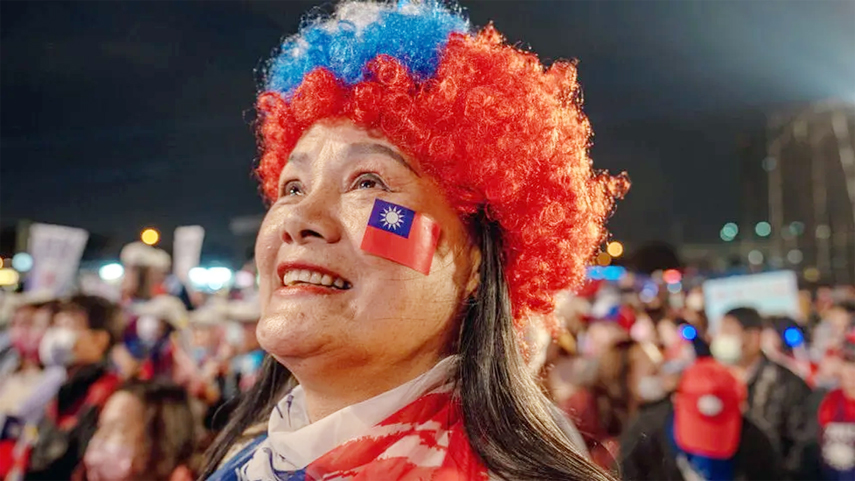
The island’s burgeoning identity is once again being tested as Taiwan votes in a new government on Saturday. And with each election, China is more troubled by the assertion of a Taiwanese identity – one that thwarts the chances of what it calls “peaceful reunification” with the mainland.
Chiang fled China in 1949, escaping impending defeat in the civil war at the hands of Mao Zedong’s communist forces. He came to Taiwan, which became the Republic of China and remains so to this day. The mainland, ruled by Mao and the Chinese Communist Party, became the People’s Republic of China. Both claimed the other’s territory. Neither Chiang, nor Mao, conceived of Taiwan as a separate place with a separate people. But that is what it has become.
Unlike Taiwan, China’s claims never waned. But almost everything else has changed on either side of the 100-mile strait. China has become richer, stronger and an unmistakable threat.
Taiwan has become a democracy and is in the middle of yet another election where its ties with Beijing are being tested. No matter the result of Saturday’s vote, its freedom is a danger to the Chinese Communist Party’s hopes of unification.