
Remembering Abdul Alim, maestro of Bengali folk music
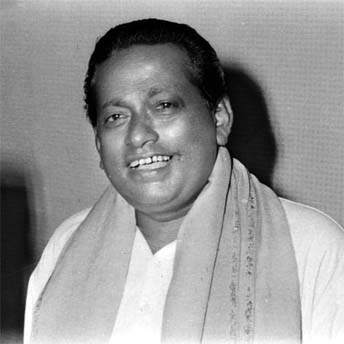
Mabruka Zaman :
‘Sorbonasha Padma Nodi’, ‘Holudia Pakhi’, ‘Porer Jayga Porer Jomi’, ‘Meghnar Kule Ghor Bandhilam’, ‘O Babu Selam Bare Bar’, ‘Sono Go Ruposhi Konna’, ‘Bondhur Bari Modhupur’ – these are not just popular Bengali folk songs, rather they are echoes of legendary singer Abdul Alim’s soulful prowess.
As we commemorate the 49th anniversary of his demise on September 5, we dive into the ocean of his musical legacy.
Abdul Alim stands as a luminary among the constellation of artists who have elevated folk music to extraordinary heights, both within the national realms and across the globe.
He was an unwavering guardian of folk culture, reshaping perceptions with each melodious note.
Before him, the realm of ‘Palligan’ was predominantly the sanctuary of rural hearts.
Yet, Alim’s golden voice transcended such boundaries, hoisting rural melodies also to the grand stages of urban choice and admiration.
Born on July 27, 1931, in Talibpur village of Murshidabad district of West Bengal, Abdul Alim’s destiny was entwined with music from an early age.
When he was 10-11 years old, his uncle introduced him to a gramophone – fondly referred to as ‘Koler Gan’, a musical device that drew him almost daily.
It was during this time that his music fixation took root, blossoming into active participation and practice under the guidance of his village music mentor Syed Ghulam Ali.
Alim’s allure gradually grew, captivating villagers with his young still matured enough and enthralling performances that left audiences mesmerised.
The tide of fate carried young Alim to Kolkata, at the behest of his mentor, in pursuit of greater artistic refinement.
However, the urban tumult failed to resonate with his spirit, leading him back to his rural roots. Yet, destiny beckoned him to Kolkata’s embrace once more, courtesy of his elder brother Sheikh Habib.
A turning point arrived in Alim’s life when lyricist Md Sultan introduced the youngster to a megaphone record company in 1943.
It was there that he encountered poet Kazi Nazrul Islam, who, captivated by Alim’s singing, promptly advocated for the recording of his songs.
Thus, Alim’s inaugural recording took place at the age of 13. In his professional journey, Abdul Alim spent some time at the Publicity Department (now the Directorate of Mass Communication).
He also imparted his wisdom at Dhaka Sangeet College. Abdul Alim’s legacy encompasses over 500 compositions, each resonating deeply with the masses.
Many of his popular tunes also graced the soundtracks of commercial films. His swan song in the movie ‘Sujon Sokhi’ – ‘Sob Sokhire Par Korite Nibo Ana Ana’ – also left a lasting impression.
Even today, the enigmatic vocalist remains an indelible ink stroke on the canvas of Bangladeshi folk music. His voice is still a conduit for the heartbeats and stories of the people, resonating with an ineffable quality that transcended linguistic confines.
His melodious narrative, embellished with rhythm and harmony, continues resonating not only with Bengali-speaking enthusiasts but also with the universal souls who find solace in the language of music.
Though Abdul Alim departed this mortal realm on September 5, 1974, at the age of 43, his rich legacy endures.
Many of his compositions are in Radio Pakistan archives, while numerous others found a home in Bangladesh Betar studio.
Though the maestro may not grace us with his presence today, his melodious resonance shall echo through the ages in his immortal compositions.
(The writer is the executive director of Abdul Alim Foundation)