
Outgoing Pakistan army chief calls 1971 surrender a political failure
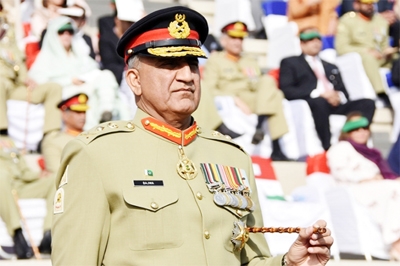
Dawn :
In a major statement involving the Liberation War, outgoing Pakistan Army Chief General Qamar Javed Bajwa has said that the country’s surrender during the 1971 war with Bangladesh was not a military but a political failure, reports Scroll.in citing the Dawn.
“I want to correct the record,” Bajwa said during an annual event of the Pakistan Army on Wednesday. “The number of fighting soldiers was not 92,000, it was rather only 34,000, the rest were from various government departments.”
The war, which Indian media terms as India-Pakistan War, was sparked by the rebellion in erstwhile East Pakistan against the government in Islamabad.
Since March of that year, Bengali nationalists had been fighting a brutal crackdown by Pakistani forces on the civil and political rights of the Bengali population.
Then Indian prime minister Indira Gandhi had provided support to the Bangladesh cause for months but the Indian military formally engaged in a full-scale war with Pakistan on December 3, 1971.
On December 16, 1971, the chief of the Pakistani forces, General Amir Abdullah Khan Niazi, along with his troops, surrendered to the allied forces consisting of the Mukti Bahini and the Indian Army and in Dhaka. The day is observed in Bangladesh as Victory Day while March 26 marks the country’s formal independence from Pakistan.
In fact, the birth of Bangladesh as an independent country came under the leadership of Father of the Nation Bangabandhu Sheikh Mujibur Rahman after a nine-month bloody war against the Pakistani occupation forces.
It also cost the lives of three million people and the honour of nearly half a million women.
On Wednesday, Bajwa claimed that “34,000 troops” fought valiantly against the 2,50,000 Indian army soldiers, and 2,00,000 trained Mukti Bahini fighters.
“They fought valiantly despite all odds and offered unprecedented sacrifices,” Bajwa said. “Their sacrifices were not recognised in Pakistan, which was a great injustice.”
During Wednesday’s event, Bajwa admitted that the Pakistan Army, for seven decades, had “unconstitutionally interfered” in the country’s politics, according to the Dawn.
Bajwa was appointed to the post in 2016 for a period of three years. In November 2019, his term was extended for another three years.