
Russian torture claims haunt recaptured east Ukraine
Reuters :
More than 10 ‘torture chambers’ found in the formerly Russian-controlled parts of the northeastern Kharkiv region
“On the second day, they broke my arm,” said Mykhailo Chindey, recalling his interrogation by Russian soldiers.
“One person was holding my hand and another one was beating my arm with a metal stick. They were beating me up two hours almost every day.”
“I lost consciousness at some point. I lost a lot of blood. They hit my heels, back, legs and kidneys,” he said.
At Izyum’s hospital, Chindey has gingerly started walking again.
His injured arm is encased in plaster, a painful reminder of Russia’s occupation of the eastern Ukrainian city.
The Russians arrested Chindey after Kyiv’s forces bombed a school near his home, killing and injuring “many” occupying troops, he said.
He was suspected of having supplied the coordinates for the strikes to Ukrainian soldiers. His interrogators insisted he reveal any communications he had had with them.
“They put a bag on my head and brought me somewhere,” the 67-year-old told AFP. “When I could see again, I recognized the place: It was the police station in Izyum.
Chindey’s experience is just one of several stories of torture and arbitrary detention by Russian troops to have emerged from eastern Ukrainian recently.
Kyiv’s forces captured a string of towns and cities in their counter-offensive this month, including Izyum, Balakliya and Kupiansk.
Ukraine’s national police chief on Friday said more than 10 “torture chambers” had been found in the formerly Russian-controlled parts of the northeastern Kharkiv region.
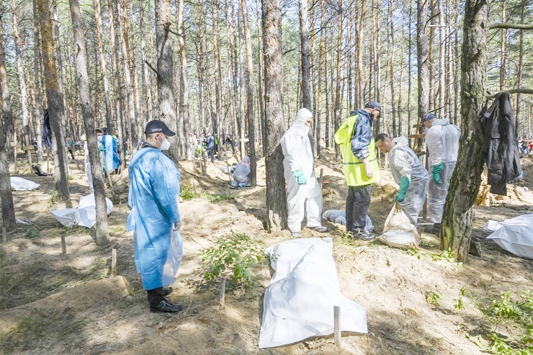
Ukrainian officials also said they found mass graves after Russian troops retreated from Izyum.
President Volodymyr Zelensky denounced the Kremlin’s forces as “murderers” and “torturers.”
Chindey showed AFP the tiny, humid cell where he said he was held for 12 days with up to seven other prisoners before the arrival of Ukrainian troops.
Stuck to the cell wall in the bomb-damaged police station’s basement was a rag from his jacket that he used as a bandage.
Other detainees were kept in a dozen cells spread out over two levels in the basement, he said.
Chindey remembered seeing around 15 people — and none of them had left there without being beaten. “I could hear the other people interrogated, screaming 24/7,” he said. One man had died there, he added.
On the ground floor, a young officer has arrived from Ukraine’s second city, Kharkiv, to investigate potential war crimes.
The office where he starts to write his report reflects chaos. Folders are strewn on the floor, alongside broken chairs and upturned items of furniture.