BBS Survey: 71pc of schools lack ample toilets

Staff Reporter :
As many as 71.4 percent of schools in Bangladesh do not have the minimum number of improved toilets required for students, exposing millions of children to poor hygiene conditions and potential health risks, according to a latest survey conducted by the Bangladesh Bureau of Statistics (BBS).
The survey found that only 28.6 percent of schools meet the internationally recommended standard of having at least one improved toilet for every 50 students.
The situation is compounded by weak human waste management practices, with just 33.9 percent of schools and 45.4 percent of healthcare facilities safely managing excreta, raising serious concerns about environmental pollution and the spread of disease.
These findings were revealed in the “WASH in Education and Healthcare Facilities Survey 2024,” released on sunday at a programme held at the Statistics Building in Agargaon, Dhaka.
The event was chaired by BBS Director General Mohammad Mizanur Rahman, while Secretary of the Statistics and Informatics Division Aleya Akter attended as the chief guest.
According to BBS, the survey covered all eight divisions and 64 districts, collecting data from government and private primary and secondary schools, along with a wide range of healthcare facilities.
Samples were selected using Watson’s formula to ensure national representativeness, and fieldwork was carried out between 26 June and 17 July this year.
Despite major sanitation gaps, access to improved water sources is relatively high. The survey shows that 95.4 percent of schools and 87.5 percent of healthcare facilities have improved water sources.
However, when assessed against the definition of basic water service—which requires the source to be located within the premises—the figures drop to 86.1 percent for schools and 70.5 percent for healthcare facilities.
Accessibility remains a challenge for persons with disabilities. Only 55.4 percent of schools have disability-friendly access to improved water points, while the proportion is even lower in healthcare facilities at 40.9 percent.
The report also highlights significant financial constraints. Only 11.1 percent of schools and 34.9 percent of healthcare facilities have a dedicated budget for water, sanitation and hygiene (WASH). BBS warned that limited funding for maintenance threatens the sustainability of existing facilities.
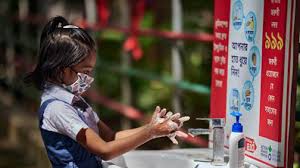
Although most institutions have at least one toilet—90.6 percent of schools and 98.5 percent of healthcare facilities—the quality and usability vary widely. Handwashing facilities are common, but many lack water and soap. As a result, only 51.7 percent of schools and just 5 percent of healthcare facilities meet the standard for basic handwashing services.
Menstrual health management remains particularly inadequate. Only 20.7 percent of schools have separate, safe toilets for adolescent girls, and a mere 6.9 percent provide basic menstrual hygiene services, contributing to absenteeism and gender disparities in education.
Waste management practices are also worrying. While 78.3 percent of schools reported proper solid waste disposal, only 25.4 percent of healthcare facilities meet basic medical waste management standards. Notably, 41.6 percent of healthcare facilities still rely on open burning of waste.
The survey further shows that WASH systems are vulnerable to natural disasters, with 24 percent of schools and 19.4 percent of healthcare facilities affected in the past year. BBS cautioned that without greater investment, better planning and climate-resilient, inclusive WASH systems, basic services will remain inadequate, undermining public health, education and environmental sustainability.